 How-to
Empathy Activities for Students: A Heroic Nepal Guide
Table of Contents
- Why Empathy Activities Matter in Schools
- Building Blocks: Recognizing and Naming Emotions
- Empathy Games for Students That Build Connection
- Empathy Activities for Elementary Students
- Perspective-Taking Activities for Students
- Empathy Role-Play Scenarios for Students
- How Heroic Nepal Integrates Empathy Into Life-Skills Learning
- Frequently Asked Questions
Last Updated: October 11, 2026
Why Empathy Activities Matter in Schools
Empathy activities for students build the foundation for stronger classrooms and healthier communities.
The real challenge is finding empathy activities for students that actually work, ones that feel natural and stick with students beyond the lesson.
At Rebuild Nepal, we've integrated empathy-building into our Heroic Learning platform because we know that life skills like empathy create the conditions for economic and social growth.
Empathy activities require practice, reflection, and real-world application. A one-time discussion won't create lasting change, but activities repeated over weeks and months, combined with family reinforcement, do.
Building Blocks: Recognizing and Naming Emotions
Before students can feel empathy for others, they need to recognize and name emotions in themselves. This foundation makes everything else possible.
Many students struggle to identify what they're feeling. When they can't name an emotion, they can't talk about it or manage it.
Activity 1: Emotion Vocabulary Building (15 minutes)
Materials needed: Poster board or digital display, markers, printed emotion cards (optional)
Setup:
- Display 6-8 emotion words on the board: happy, sad, angry, scared, surprised, proud, frustrated, calm
- For each emotion, ask students to describe a time they felt it (keep responses brief, 1-2 sentences)
- Have them share physical sensations: "When I'm angry, my face gets hot and my fists clench." "When I'm scared, my stomach feels tight."
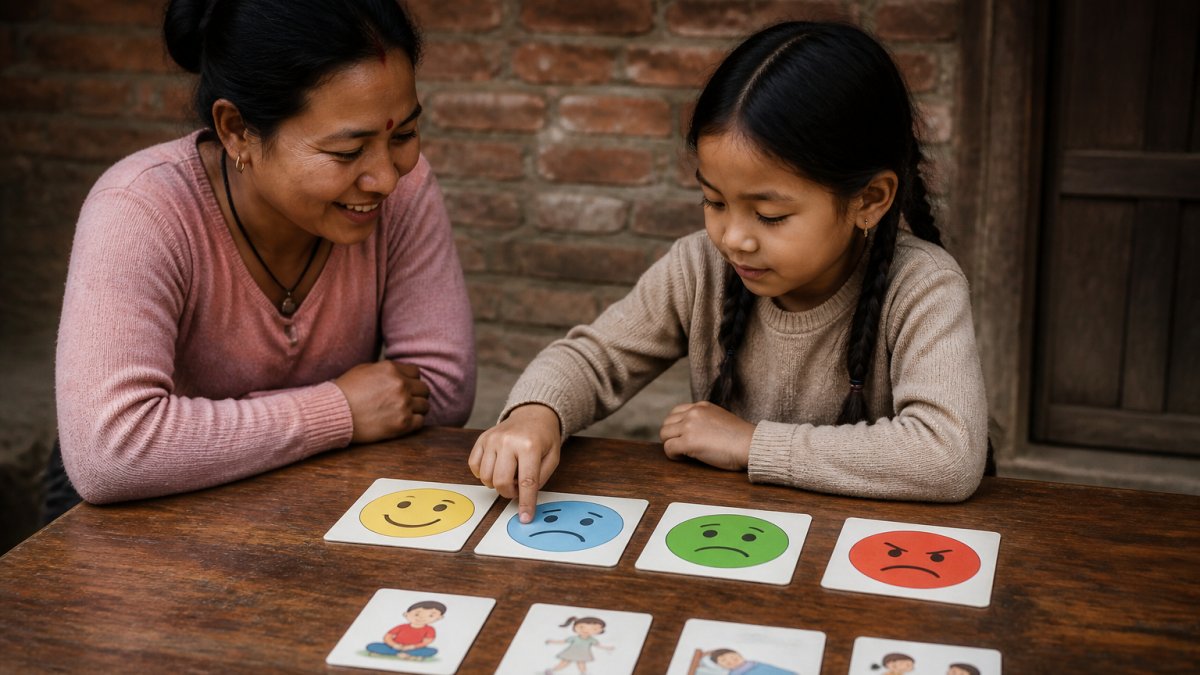
- Create a classroom emotion chart they can reference all year, ideally with drawings or photos showing facial expressions
Debrief questions:
- Can you feel more than one emotion at the same time?
- Are some emotions easier or harder to talk about?
Accessibility notes:
- Offer emotion cards with pictures for nonverbal students
- Label emotions in home languages for multilingual learners
- Allow students with sensory sensitivities to describe emotions without physical demonstration
Activity 2: Emotion Charades (10-15 minutes)
Materials needed: None (or optional: emotion cards to draw from)
Setup:
- One student acts out an emotion without speaking while classmates guess
- Rotate through 4-6 students
- Emphasize that there's no single "right" way to show an emotion, different people express the same feeling differently
Debrief questions:
- What body language clues helped you guess?
- How do you show emotions in your family or culture?
Accessibility notes:
- Allow students to pass if acting feels uncomfortable
- Offer emotion cards with written descriptions for language support
- Recognize cultural differences in emotional expression
Activity 3: Emotion Feelings Chart (Ongoing reference)
Materials needed: Large poster, laminated emotion faces or photos, markers for student annotations
Setup:
- Create a visual chart with emotion words, facial expressions, and body language cues
- Post it permanently in the classroom
- Throughout the year, add student drawings, photos, or descriptions of what each emotion looks like and feels like
How to use it:
- When a student is upset, redirect them: "What emotion are you feeling right now? Can you point to it on the chart?"
- Use it during morning meetings: "How are you feeling today? Show me on the chart."
- Reference it during read-alouds: "How do you think the character is feeling? Find it on our chart."
Accessibility notes:
- Include multiple representations of each emotion (drawings, photos, words, symbols)
- For students with anxiety, include calming emotions (safe, peaceful, focused) alongside difficult ones
Why This Matters
These three activities build emotional literacy, the ability to recognize, name, and talk about feelings. Students who can name emotions are better equipped to manage them and respond with empathy to others.
Empathy Games for Students That Build Connection
Games create a low-pressure space where students practice empathy. The best games combine movement, storytelling, and perspective-taking, bridging practice and real-world application.
Game 1: Walking in Their Shoes (Perspective-Taking), 20 minutes
Materials needed: None (or optional: scenario cards)
Setup:
- Describe a realistic scenario students face: "Your friend didn't invite you to their birthday party," or "Someone spread a rumor about you," or "You weren't picked for the team."
- Ask students to sit quietly and imagine (2-3 minutes):
- How would you feel?
- Why might your friend have done this?
- What would you want them to know?
- Have 3-4 volunteers share their thoughts
- Then reveal the friend's perspective: "Your friend's family only had room for three guests, and they were as upset as you were because they wanted to invite you."
- Discuss how knowing the other person's reason changes how they feel
Debrief questions:
- Did learning the reason change how you felt about your friend?
- How often do we assume we know why someone did something without asking?
- What would you do or say to your friend after learning their reason?
Real-world application:
- Over the next week, when a conflict happens, ask students: "Can you walk in their shoes? What might they have been thinking or feeling?"
- Create a "Walking in Their Shoes" poster where students write down conflicts they witnessed and what both people might have been feeling
Accessibility notes:
- Offer written scenario cards for students who need time to process
- Allow students to write or draw their response instead of speaking aloud
- Choose scenarios reflecting diverse family structures and experiences
Game 2: Emotion Freeze Dance (Movement + Expression), 10-15 minutes
Materials needed: Music player, music (upbeat instrumental works well)
Setup:
- Play music and have students dance freely
- When the music stops, call out an emotion: "Freeze! Show me what sadness looks like."
- Students hold a pose that expresses that emotion
- Play music again and repeat with 4-6 different emotions
- Optional: Have students guess what emotion others are showing
Debrief questions:
- Did different people show the same emotion in different ways?
- What body parts help show emotions (face, hands, posture)?
- When you froze in that pose, did you actually start to feel that emotion a little?
Real-world application:
- Use this as a quick reset during the day: "Everyone freeze in a calm pose." This helps students shift their emotional state.
- Reference it during conflicts: "Show me what a sorry face looks like" or "Show me what listening looks like."
Accessibility notes:
- Allow students to move in their own way (seated, standing, small movements)
- Offer a quiet alternative: students can draw or mime the emotion
- Allow students to opt out of specific poses if needed
Game 3: Kindness Bingo (Observation + Recognition), Ongoing throughout the week
Materials needed: Printed bingo cards (one per student), pencils
Setup:
- Create bingo cards with acts of kindness: "Helped someone carry something," "Listened to a friend's problem," "Included someone who was alone," "Shared without being asked," "Apologized when they made a mistake," "Noticed someone was sad and asked if they were okay"
- Give each student a card
- Throughout the week, students mark off squares as they notice these behaviors in others (or experience them)
- At the end of the week, discuss what they observed
Debrief questions:
- Which acts of kindness did you see most often?
- Which ones were hardest to spot?
- Did noticing kindness change how you felt about your classmates?
Real-world application:
- This game trains students to notice empathy in action, not just practice it. Over time, they become more aware of kind behavior and more likely to replicate it.
- Create a "Kindness Wall" where students post the acts they observed
- Challenge: "This week, try to do three acts of kindness that someone else can mark off their bingo card"
Accessibility notes:
- Simplify language for younger readers and include visual icons
- Allow verbal reporting instead of marking the card
Why These Games Work
These games work because they're repeatable, require no special materials, and create shared language around empathy. The debrief and real-world application sections transform a fun activity into genuine skill-building.
Empathy Activities for Elementary Students
Elementary students are developing the ability to understand that others have different thoughts and feelings.
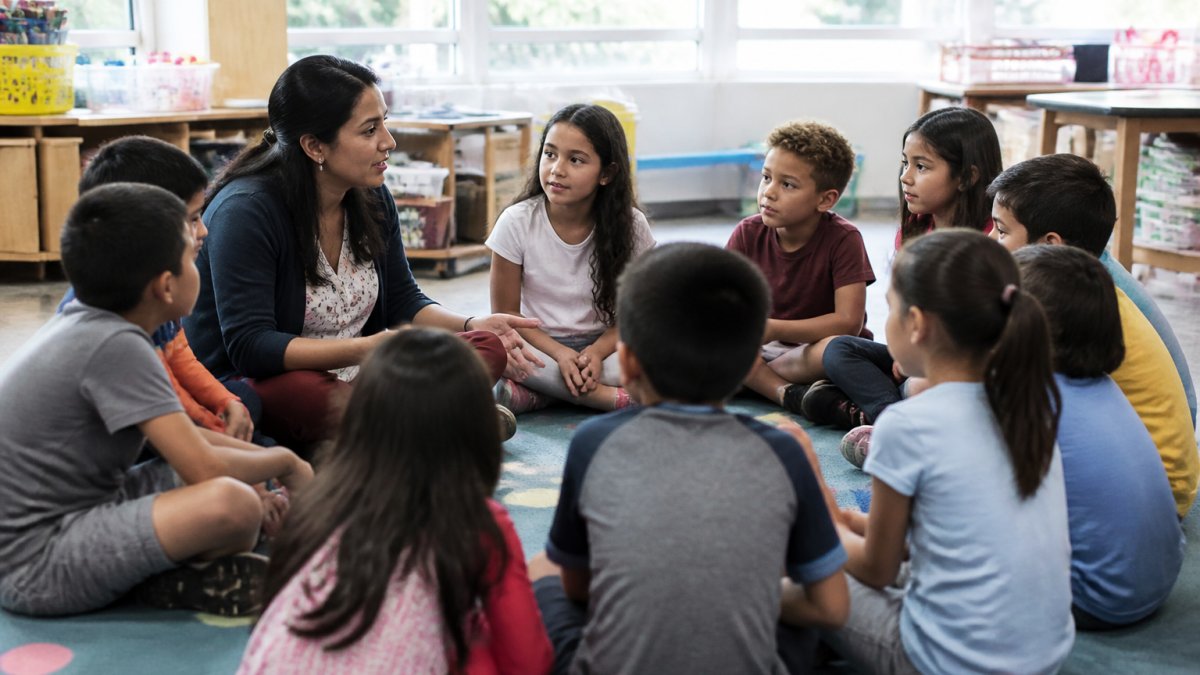
For grades K-2, keep activities short, concrete, and movement-based.
Circle time emotion sharing: Sit in a circle and pass an object.
Puppet conversations: Use puppets to explore emotions.
For grades 3-5, activities can include writing or drawing.
Role-play scenarios: Present realistic situations and have students act out different responses, discussing which show empathy.
Gratitude circles: Each student shares one thing they're grateful for, shifting focus to positive connections.
Perspective-Taking Activities for Students
Perspective-taking is the cognitive skill underlying empathy, the ability to step into someone else's mental and emotional world.
One effective perspective-taking activity is the story reversal exercise.
The two-sides interview pairs students in a scenario with two perspectives (e.g., new student vs. classmate).
Photo analysis: Show a photograph of a person in an emotional moment without context.
These activities scaffold from stories to real-world application, helping students internalize that multiple perspectives are valid, the foundation of empathy.
Empathy Role-Play Scenarios for Students
Role-play creates a safe space to practice empathy in realistic situations without real-world stakes.
Effective empathy role-play scenarios for students start with situations students face:
Scenario 1: The Left-Out Classmate, Student A plays alone; Student B decides what to do. Debrief: Which response shows empathy?
Scenario 2: The Mistake, Student A breaks Student B's pencil. Debrief: What does each person need?
Scenario 3: The Disagreement, Two students disagree about a game rule. Debrief: What would an empathetic response look like?
The debrief is key: ask "How did each person feel? What did they need?" This reflection turns the activity into learning. Fishbowl role-play lets students sit in a circle watching two act out a scenario, then discuss what they observed.
How Heroic Nepal Integrates Empathy Into Life-Skills Learning
The activities covered, emotion recognition, perspective-taking, kindness games, and role-play, are exactly what students and families practice in the Heroic Learning platform. When families practice empathy together, real behavior change happens.
Empathy activities work when practiced repeatedly, reflected on, and reinforced at home. The real transformation happens when schools and families work together. Join Rebuild Nepal and the Heroic Learning platform to make empathy practice part of your family's weekly routine.
Frequently Asked Questions
What are some fun empathy activities for students that don't require much preparation?
Simple activities include emotion charades (students act out feelings for classmates to guess), gratitude circles (sharing what they appreciate about each other), and active listening pairs (one student talks while the other listens without interrupting, then they switch). These require no materials and take 10-15 minutes. Role-play scenarios where students act out real-school situations like someone being left out also build empathy quickly. The Heroic Learning platform gamifies these activities so students stay engaged while developing genuine compassion for others.
How can teachers teach empathy in schools when students have different backgrounds and experiences?
Start by validating that everyone's feelings are real, even if they come from different life experiences. Use perspective-taking activities where students imagine how someone with a different background might feel in a situation. Small-group discussions allow quieter students to share safely. Pair students from different backgrounds for partner activities so they learn from each other. Model empathy yourself by acknowledging student emotions and explaining your own feelings. The Heroic Learning platform's approach involves families and community experts, so students see empathy modeled across their entire support network, not just at school.
What empathy games can help middle school students develop stronger perspective-taking skills?
Middle schoolers respond well to games like 'Walk in Their Shoes' (students swap perspectives on a conflict and explain the other person's viewpoint), 'Feelings Bingo' (matching emotions to scenarios), and structured debates where students argue a position opposite their own belief. These games challenge them to think beyond themselves. Peer-mentoring activities where older students guide younger ones also build perspective-taking. Role-play scenarios involving peer pressure, friendship drama, or exclusion feel relevant to their lives. Games that reveal how assumptions can be wrong help them see why understanding others' perspectives matters.
How do I assess whether students are actually developing empathy through these activities?
Watch for behavior changes: Do students offer help without being asked? Do they comfort classmates who are upset? Do they speak up when someone is being excluded? Listen to their language: Do they use phrases like 'I understand why you felt that way' or 'That must have been hard'? Ask reflection questions after activities: 'How did that character feel? Why?' 'What would you do in that situation?' Observe peer relationships over time. The Heroic Learning platform tracks engagement with empathy-focused activities and provides families with progress insights, so you can see growth both in the classroom and at home where parents reinforce these skills.