 How-to
7 Ways to Make Learning Fun for the Whole Family With Heroic Nepal
Last Updated: November 1, 2026
Quick Summary
Learning fun family activities work best when everyone joins in, using short sessions of ten to fifteen minutes and simple household items. Assign each person a role by age, such as Guesser, Clue-Giver or Judge, and protect a fifteen-minute weekly slot for learning fun family time.
- Keep sessions to ten to fifteen minutes so they are easy to repeat.
- Assign each player a role based on their age and ability.
- Use a ten-minute timer, and give everyone one point for taking part.
- Run a short two-minute prep checklist before each session.
- Write down three lines per session to track progress without testing.
Table of Contents
- Why Family Learning Works Better When Everyone Joins In
- Fun Educational Activities for Families at Home
- Learning Games for the Whole Family
- Building a Family Learning Routine That Lasts
- How Parents Can Help Children Learn at Home
- Handling Limited Time, Different Needs and Frustration
- Start Your First Family Learning Session This Week
- Frequently Asked Questions
Why Family Learning Works Better When Everyone Joins In
Learning fun family time is easier than most parents expect.
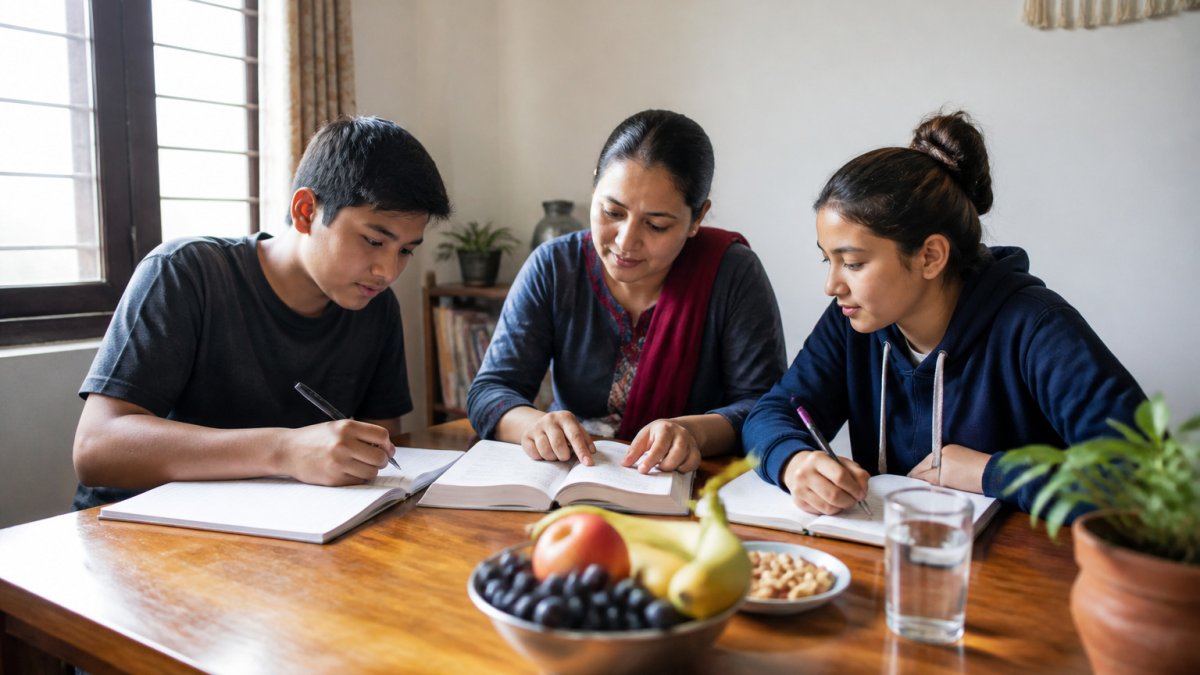
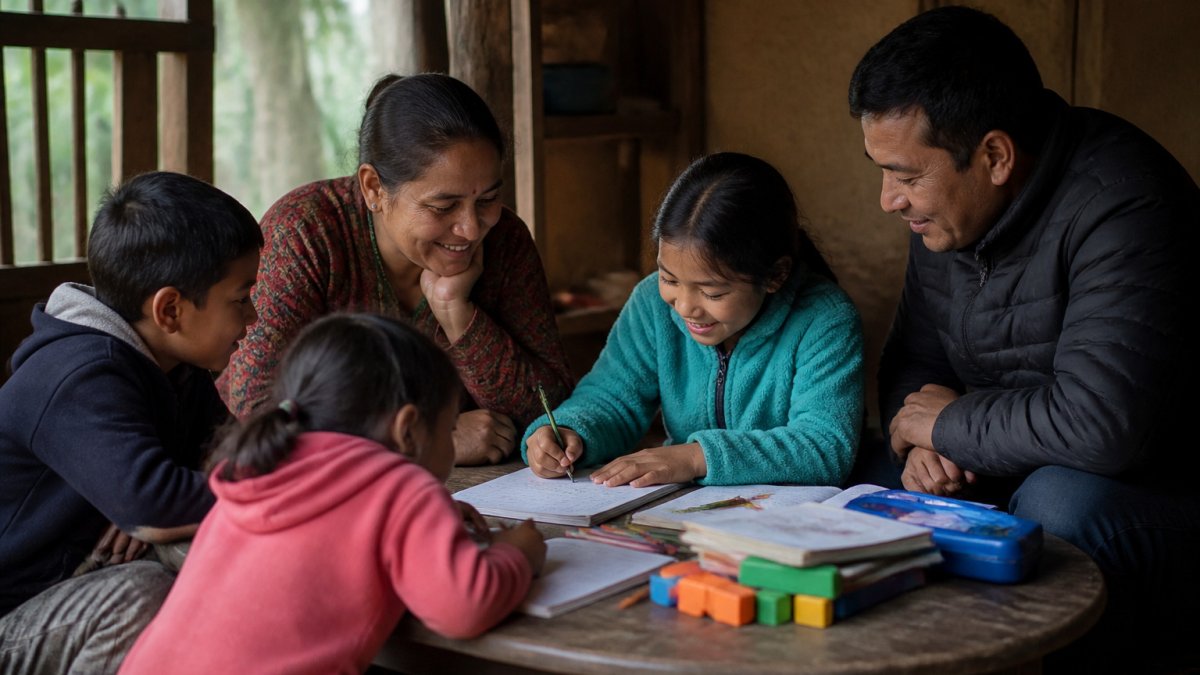
When parents, grandparents, and siblings learn side by side, children stay engaged longer. They see that learning is not only for school. It is something the whole household does.
Families also tend to share the load. An older sibling can read a question aloud, a grandparent can tell a story behind a word, and a parent can keep score.
- Children copy the habits they see adults practise
- Older family members bring life experience into the lesson
- Younger children gain confidence by teaching a sibling something new
Fun Educational Activities for Families at Home
Fun educational activities for families at home do not need special equipment. Most of them use things already in the house.
Start with activities that take ten to fifteen minutes. Short sessions are easier to repeat, and repetition is what builds skill.
Good starter activities include:
- Read aloud together. Each person reads one page or takes a different character.
- Draw and describe. One person draws a picture, and the others guess what it shows.
- Sort and count. Use beans, rice, or buttons to sort by colour, size, or shape.
Keep the first few sessions simple. Once everyone feels comfortable, add a small challenge or a friendly contest.
Learning Games for the Whole Family
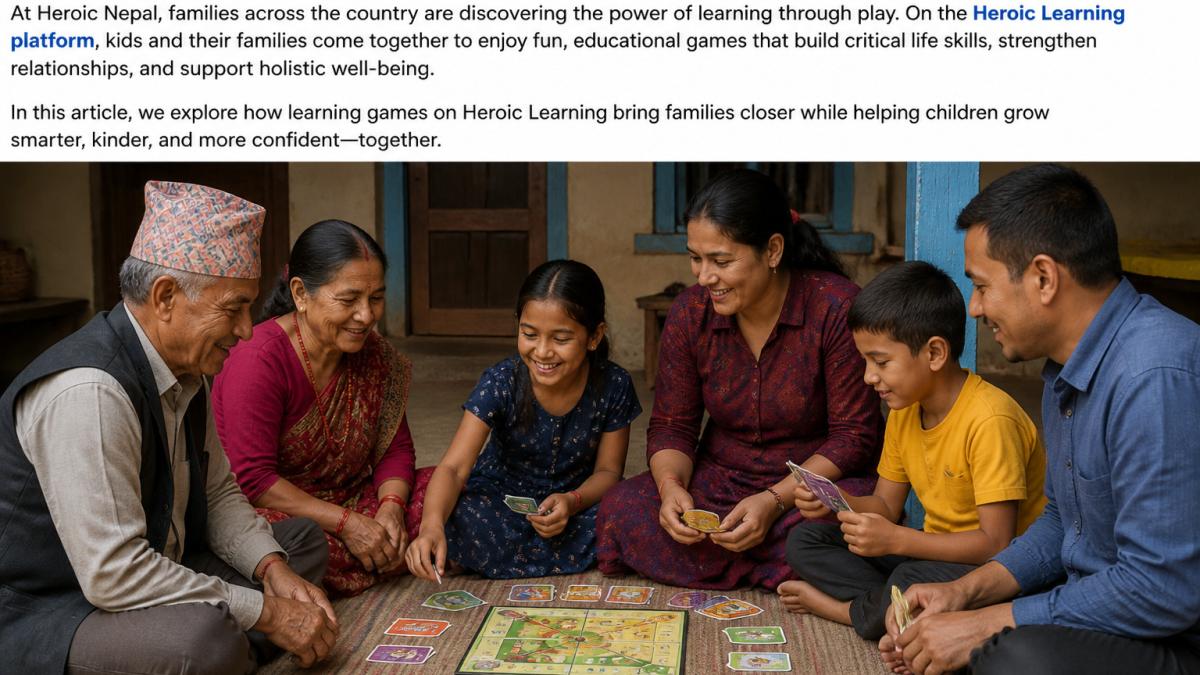
Most game lists assume one age group. The real challenge is running a single game that a four-year-old, an eight-year-old, a twelve-year-old, and two adults can all play without anyone being bored or left behind. The families on the Heroic Learning platform use a simple three-role system that can help with this, and you can copy it tonight.
The Three-Role System for Mixed Ages
Instead of giving everyone the same task, assign each player a role based on what they can already do:
- The Guesser (youngest players): answers with a picture, a gesture, or a single word.
- The Clue-Giver (school-age children): reads the card, gives hints, and keeps the timer.
- The Scorekeeper or Judge (teens and adults): tracks points, settles disputes, and asks follow-up questions like "Why did you choose that clue?"
Rotate roles each round. A younger child who watches an older sibling give clues for two rounds is learning the rules before they have to perform them. This is the same scaffolding principle teachers use in multi-grade classrooms, and it works at the kitchen table.
Five Games That Scale Across Ages
Each of these works with the three-role system and needs nothing you do not already own:
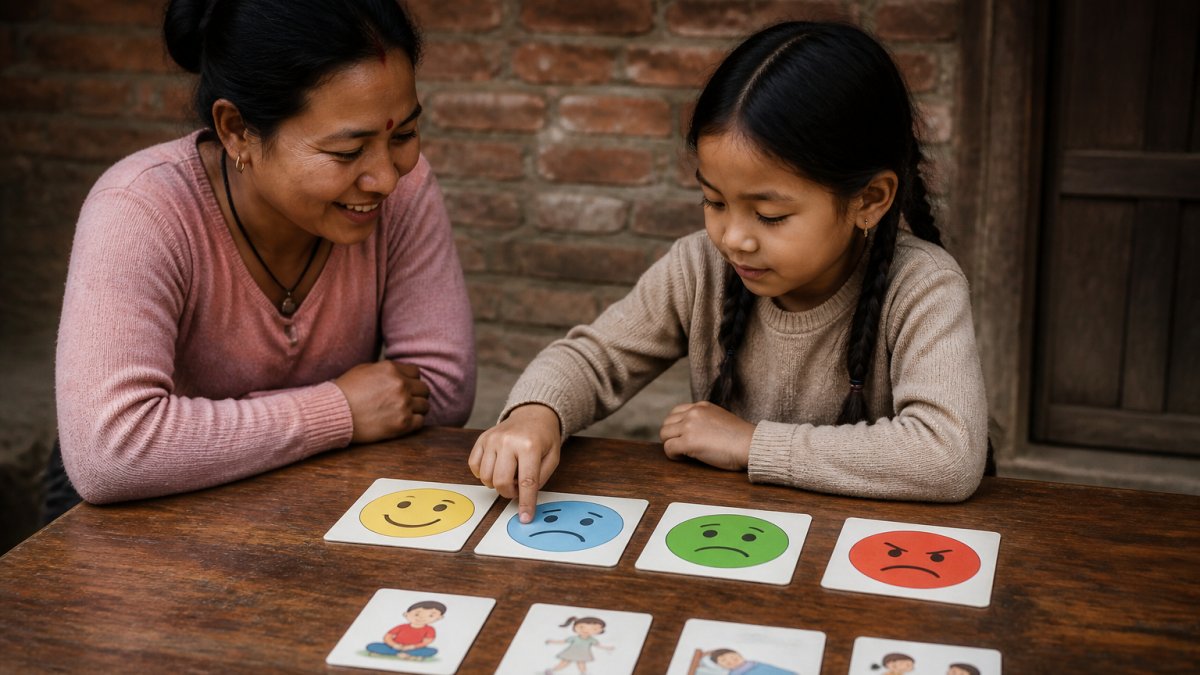
- Memory match with tiered cards. Younger children match pictures; older children match words to pictures; teens match definitions to words. Everyone plays the same board.
- Mystery bag. One player hides a household object in a cloth bag. The Guesser asks yes-or-no questions. The Clue-Giver may only answer in full sentences, which builds language for school-age children.
- Word chain with a twist. Each player says a word starting with the last letter of the previous word. Younger players may say a word starting with the last sound instead, which keeps them in the game.
- Counting walk. Count steps, doors, or red objects on a short walk. Give each child a different thing to count so nobody competes on the same tally.
Low-Cost and No-Prep Options
You do not need to buy anything. Common household items such as scrap paper and a pencil cover most of the games above.
How to Tell a Game Is Working
A good family game produces three things: laughter, at least one question from a child that you did not plan for, and a request to play again. If a game produces none of these after two rounds, change the roles rather than the game. Most frustration comes from a child being asked to do a task that is one step too hard, not from the game itself.
When to Stop
Stop while it is still fun. A common pattern among families is to end a session when the youngest player is still engaged rather than waiting for everyone to tire.
The article's three-role system and five games are easy to scan at a glance, so here is a quick summary of who does what and how each game scales across ages.
| Role | Who plays it | Main job |
|---|---|---|
| The Guesser | Youngest players | Answers with a picture, gesture or single word |
| The Clue-Giver | School-age children | Reads the card, gives hints, keeps the timer |
| The Scorekeeper or Judge | Teens and adults | Tracks points, settles disputes, asks follow-up questions |
| Memory match with tiered cards | All ages | Pictures, words or definitions by age |
| Mystery bag | All ages | Yes-or-no questions, full-sentence clues |
| Word chain with a twist | All ages | Last letter, or last sound for younger players |
| Counting walk | All ages | Each child counts something different |
| Kitchen maths | All ages | Measuring, splitting, or scaling recipes |
Building a Family Learning Routine That Lasts
A routine fails for one of three reasons: it is too long, it is too vague, or it depends on one person's energy. A short, written plan that anyone in the household can run helps avoid all three. Here is the framework.
The Fifteen-Minute Weekly Anchor
Pick one fixed slot each week, a weekday evening after dinner or a weekend morning, and protect it for fifteen minutes. Fifteen minutes is short enough that nobody dreads it and long enough to finish one game or one activity. Two anchors per week is the realistic ceiling for most busy households; three is where attendance starts to slip.
A simple weekly pattern that works across ages:
- Week 1: A reading or storytelling activity (low energy, everyone can join).
- Week 2: A game from the list above (medium energy, competitive).
- Week 3: A hands-on activity such as sorting, measuring, or drawing (focused, quiet).
- Week 4: A family choice, whoever did not pick last time chooses.
Repeat the cycle. After two months you will have a bank of favourites without needing to plan from scratch.
The Two-Minute Prep Checklist
Before each session, one adult runs this checklist. It takes two minutes and prevents most mid-session stalls:
- Clear the table and put away screens.
- Gather the materials in one bowl or tray.
- Decide who takes each role (Guesser, Clue-Giver, Judge).
- Set the timer.
Fitting Learning Into Busy Weeks
Some weeks will not allow a full session. Use micro-sessions instead: a five-minute word game while cooking, a counting walk to the shop, or a two-minute "what did you notice today?" question at dinner. Micro-sessions keep the habit alive without pretending you have more time than you do.
A useful rule: never cancel, shrink. A five-minute version of the planned activity preserves the routine; skipping it breaks the chain.
Letting Each Family Member Own a Piece
Routines last when responsibility is shared. Give each person a job:
- One child chooses the activity for the week.
- Another child gathers materials.
- A teen keeps a simple log of what was played and what worked.
- An adult runs the timer and the checklist.
When everyone owns a piece, no single person carries the routine, and children learn that learning is something they organise, not something done to them.
Noticing Progress Without Testing
You do not need quizzes to see learning. Keep a short log, three lines per session is enough, noting what each child did, what they asked about, and what they want to try next. Over a month, the log shows progress that a single session never reveals: a child who needed hints now gives them, a younger child who watched now plays, a teen who resisted now keeps score without being asked.
When the Routine Breaks
It will break, holidays, illness, exams. The fix is to restart at the smallest possible size: one five-minute session, one activity, one person choosing. Do not try to catch up on missed weeks. Restart small and let the routine rebuild itself.
How Parents Can Help Children Learn at Home
Parents do not need to be teachers. Your main job is to ask questions, listen to answers, and show interest.
Praise effort rather than speed. A child who tries hard on a difficult puzzle deserves recognition even if they do not finish first.
Be a learner too. When you admit you do not know something and look it up together, children learn that curiosity is normal.
Handling Limited Time, Different Needs and Frustration
Many families are busy. Work, chores, and school leave little room for extra activities.
Children also learn in different ways. Some prefer drawing, others prefer moving or talking.
Frustration is normal. If a game is not working, stop, change the rules, or choose something easier.
Safety matters too. Keep sharp objects, hot items, and small pieces away from young children during hands-on activities, and clean up together afterward.
Start Your First Family Learning Session This Week
You can start today. Choose one activity from this article, gather what you need, and set aside fifteen minutes.
The Heroic Learning platform, used by kids and their families, is where these family learning ideas are put into practice. Visit the platform to see how it works and how your family can join. Explore how the Heroic Learning platform works for families
To begin right away, follow the steps and join the program using the QR code and link. Get the QR code and link to start your first session
For families who want to plan for safety at home, our Nepal family disaster preparedness training guide shows how learning can build readiness.
Parents weighing academic and life skills learning may also find this guide on life skills education versus academic education useful.
Frequently Asked Questions
How to make learning fun and enjoyable?
Start with activities children already like, such as drawing, counting objects or telling stories, and turn them into short games with a clear goal. Keep sessions to 15 to 20 minutes, let children choose the topic when possible, and praise effort rather than speed. Fun comes from shared participation: when parents and grandparents join in and make mistakes too, children relax and keep going. Rotate activities so nothing becomes stale, and end each session on a success so children look forward to the next one.
What are some educational activities families can do at home?
Useful options include reading a page aloud and asking everyone what happened, sorting household items by colour or size, writing a shared family story one sentence at a time, and simple experiments such as watching which materials float in water. Cooking together teaches measuring and reading, while a short observation walk teaches noticing and describing. Choose two or three activities each week that match the ages in your home, so older and younger children can contribute at their own level.
How do you keep children engaged while learning at home?
Keep tasks short, visible and linked to something real, such as counting the vegetables for dinner or planning a route on a map. Give children a role, like scorekeeper or question-asker, so everyone stays active. Switch between movement and quiet activities, and stop before boredom sets in. If a child loses interest, change the activity rather than pushing harder, and note what worked so you can repeat it.
How can parents help children learn through everyday activities?
Everyday tasks are natural learning moments. Ask children to estimate how long a chore will take, count change at the shop, read labels on food packets, or talk through a plan before a trip. Asking open questions such as what they noticed or why they think something happened builds thinking skills more than giving answers. Consistent small conversations at home, repeated over weeks, often matter more than occasional special projects.
Make learning a shared family habit with Heroic Nepal. Join the cause today and help your family grow together.