 How-to
Healthy Daily Habits for Teens? Heroic Nepal Shows How
Last Updated: November 2, 2026
Quick Summary
Healthy daily habits for teenagers include a consistent sleep routine, balanced meals, regular movement, enough water, and managed screen time. On the Heroic Learning platform from Heroic Nepal, kids and their families practice these habits together, with a game-based platform guiding each step at home.
- Keep a fixed wake time every day, even on weekends, to protect sleep.
- Set a wind-down time about 30 minutes before bed and keep phones out of the bedroom overnight.
- Build meals around vegetables, fruit, whole grains, protein foods, and low-fat dairy.
- Start with two tiny habits and track them on a paper grid for one week.
- Never miss a habit two days in a row, and shrink any habit that keeps failing.
Table of Contents
- How Heroic Nepal Helps Families Build Daily Habits Together
- Building a Consistent Sleep Routine That Teens Can Keep
- Eating a Balanced Diet Without Diet Culture
- Staying Active and Drinking Water Every Day
- Managing Screen Time and Protecting Online Well-Being
- Planning Your Week: Time Management Skills for High Schoolers
- Starting Your Teen's First Habit Tracker This Week
- Frequently Asked Questions
How Heroic Nepal Helps Families Build Daily Habits Together
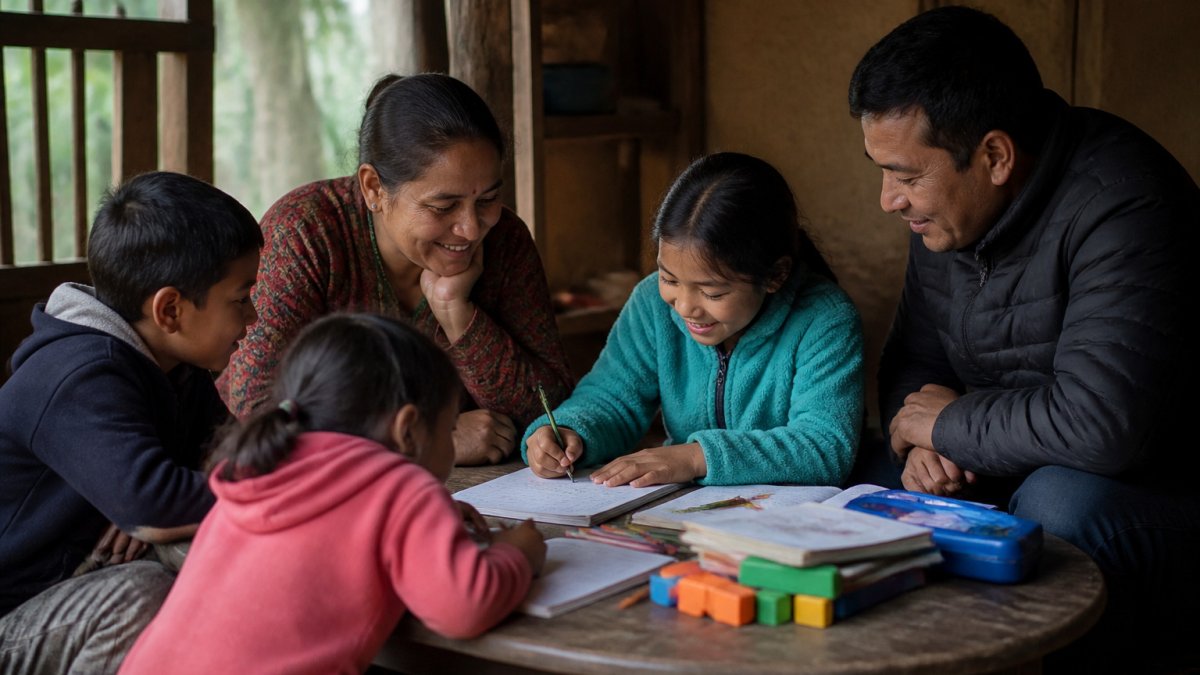
Healthy daily habits for teenagers are built one small choice at a time. In Nepal, the families and kids using the Heroic Learning platform from Heroic Nepal are learning these habits together, at home and in their own time. The approach is simple: families practice real habits side by side, with a game-based platform guiding each step. Learn more about what the Heroic Learning platform offers for families.
The idea is that habits stick better when the whole family is involved. Parents, grandparents, siblings, and local mentors each play a part. See how family involvement works in the Heroic Nepal approach. Kids learn through games, and adults learn alongside them.
- Parents set a shared goal for the week
- Kids pick one habit to try first
- Siblings or grandparents check in each evening
- A local mentor can answer questions when needed
The sections below cover the habits that matter most for teens: sleep, food, movement, water, screen use, weekly planning, and habit tracking.
Building a Consistent Sleep Routine That Teens Can Keep
Teens need steady sleep to think clearly, manage mood, and keep up with school. A consistent bedtime and wake time matter more than one perfect night. Teenagers generally need several hours of sleep a night, and a fixed wake time is one of the most useful habits to protect.
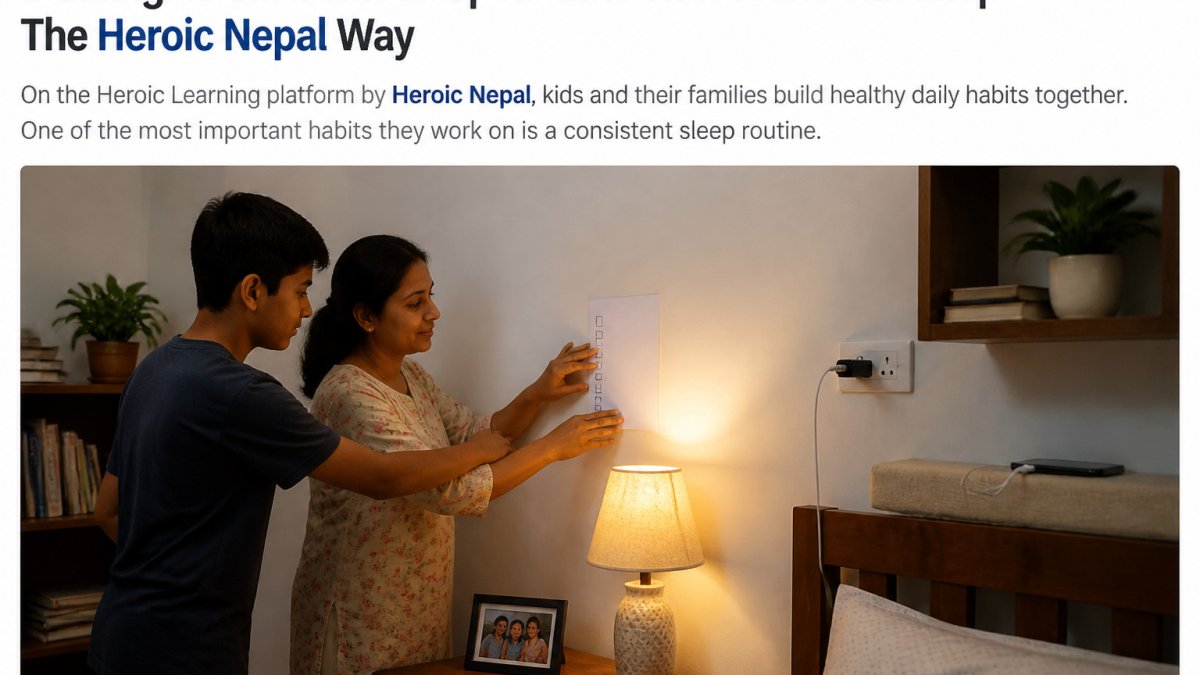
Start with a simple routine. Pick a bedtime that gives the teen enough hours before school. Then set a wind-down time about 30 minutes before bed.
- Dim the lights and put phones away at the wind-down time
- Keep the room cool, quiet, and dark
- Avoid heavy meals and strong tea late at night
- Wake at the same time, even on weekends
Why the wake time comes first
Bedtimes drift when homework, tuition classes, or family events run late. Wake times are easier to protect. Some families find it easier to anchor the morning first with the same alarm and breakfast time, and let bedtime settle as the teen gets tired earlier.
Handling homework and late-night screens
Late-night screen use is the most common reason a teen's sleep slips. The fix is not a blanket ban but a boundary the family agrees on:
- Set a charging spot outside the bedroom, a kitchen counter or hallway shelf works
- Use a "last scroll" time, for example 30 minutes before lights out
- For unavoidable late homework, switch to paper or dim the screen and finish in a shared room
- Keep notifications off overnight so a single message does not restart the cycle
Planning for the hard nights
Exams or family events will shift the schedule. A small change, like going to bed 30 minutes later, is fine. Getting back on track the next day is what counts. After a late night, resist the urge to sleep in for hours, a short nap in the early afternoon is gentler on the schedule than a long weekend lie-in.
A starter sleep plan for the first week
- Pick one fixed wake time and set the same alarm for all seven days
- Choose a wind-down time 30 minutes before bed and move the phone out of the room
- Dim the lights and stop strong tea after the evening meal
- Note each morning how the night went, one word is enough
- Review after seven days and adjust only one thing at a time
Families on the Heroic Learning platform run this starter plan as a shared weekly goal, with siblings or grandparents checking in each evening and a local mentor available if questions come up.
Eating a Balanced Diet Without Diet Culture
A balanced diet for teenagers is about variety, not rules. Growing bodies need enough food, and teens should never be made to feel guilty about eating.
Aim for a plate that includes:
- Vegetables and fruits, in several colors
- Whole grains, such as brown rice or whole wheat roti
- Protein foods, such as dal, eggs, fish, chicken, or paneer
- Low-fat dairy or fortified alternatives
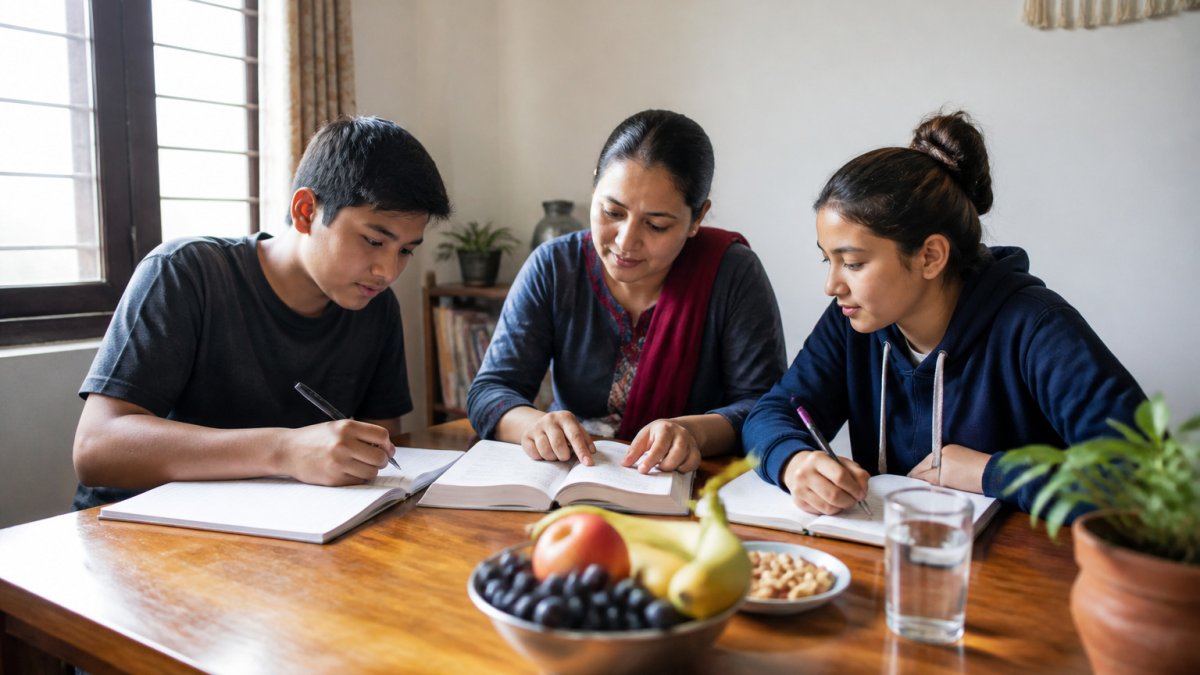
Small, steady changes work better than strict diets. Keep healthy snacks like fruit, roasted chana, or yogurt within reach. Eat meals together when possible, since family meals support better food habits.
Staying Active and Drinking Water Every Day
Teens benefit from regular movement (the WHO). The goal is daily activity they enjoy, not punishing workouts.
- Walking to school or a friend's house counts
- Dancing, football, volleyball, or household chores all add up
- Try to get outside for some of the activity
- Break up long periods of sitting with short movement breaks
Water is just as important. Keep a bottle at school and at home. Teens who feel thirsty, tired, or headachy during the day may simply need more water. Limit sugary drinks, which add calories without helping the body stay hydrated.
Managing Screen Time and Protecting Online Well-Being
Screens are part of modern life, but too much use can crowd out sleep, exercise, and family time. Online well-being means both how much time is spent and what teens see and share. For everyday support on money-related habits, see Financial Literacy: Daily habits build lasting agency.
Families can set simple rules together:
- No phones in bedrooms overnight
- Screen-free time during meals
- A daily limit that the family agrees on
- Talk openly about what to do if something online feels wrong
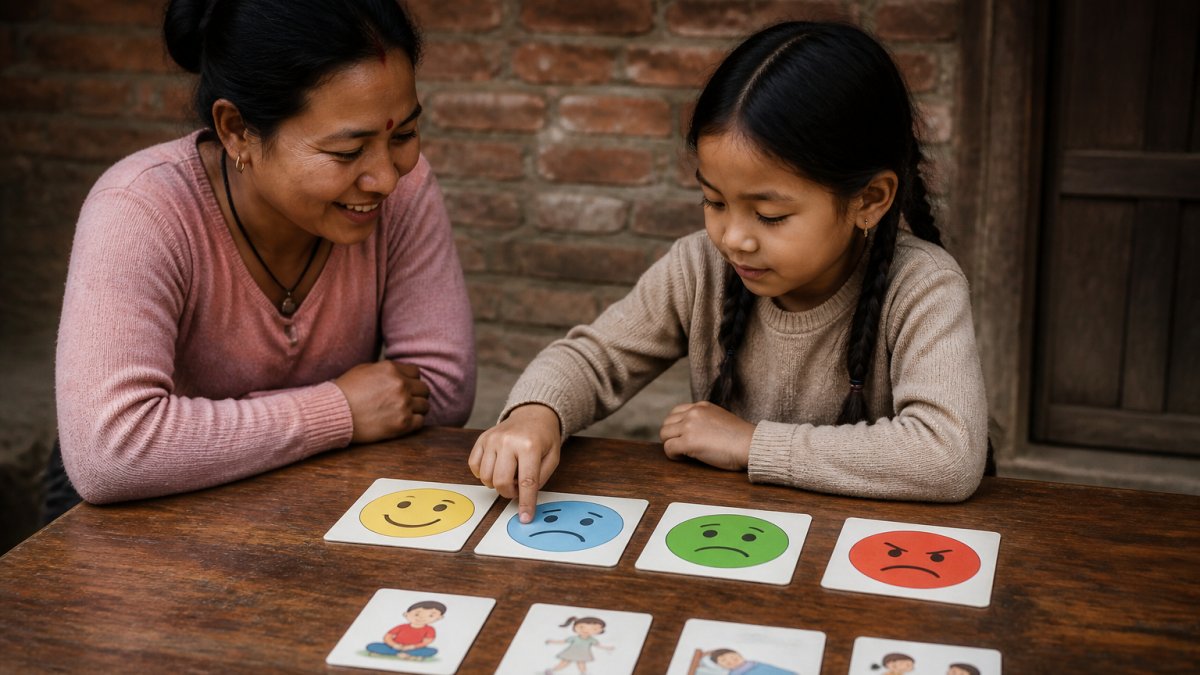
Teens are more likely to follow rules they helped make. Ask them what they think is fair, and revisit the rules as they grow. If a teen seems anxious, withdrawn, or unhappy for weeks, talk to a trusted adult or a health worker. Mental health support is always worth asking for early.
Planning Your Week: Time Management Skills for High Schoolers
Good time management helps teens balance school, activities, and personal time. It also builds independence, which is one of the most useful life skills a young person can learn.
A simple weekly plan can work well:
- List school deadlines, tests, and family commitments
- Block out time for homework and review
- Add one or two fun or restful activities
- Leave some time empty for surprises
Review the plan every Sunday for 10 minutes. Ask what worked and what did not. Adjust the plan rather than starting over.
Starting Your Teen's First Habit Tracker This Week
Tracking habits makes progress visible, which keeps motivation up. Start small, with just two or three habits, so the tracker feels easy to use. The goal is not a perfect streak, it is a clear picture of what is actually happening, so the teen can adjust.
Shrink each habit until it is almost too easy
A habit that feels like a chore gets dropped in a week. One useful approach is to shrink each habit to a version the teen could do on their worst day:
- "Walk daily" becomes "walk to the gate and back"
- "Read more" becomes "read one page"
- "Sleep on time" becomes "phone on the kitchen counter by wind-down time"
Once the small version is steady for a week or two, it can grow. Starting tiny is not a shortcut, it is how the habit survives a busy school week.
Build the tracker
Here is a simple way to begin:
- Pick two habits, such as a bedtime routine and a daily walk
- Draw a grid on paper with seven days across the top
- Mark each day the habit is done
- Add one column for a single word on how it felt
- Celebrate a full week with a family activity
A paper grid on the fridge works well. A shared family tracker, one sheet for the whole household, often keeps teens going longer than a private one, because everyone can see the effort.
Plan for missed days before they happen
Every tracker has gaps. What matters is the response:
- Never miss twice. One missed day is normal; two in a row is the pattern to interrupt
- Do the smallest version on a low day rather than skipping entirely
- Reset weekly, not daily. Judge the week as a whole, not each square
- Drop a habit that keeps failing after two weeks and replace it with a smaller version
A realistic four-week starter plan
| Week | Focus | What success looks like |
|---|---|---|
| 1 | Pick two tiny habits and track daily | Most days marked, no pressure on streaks |
| 2 | Keep the same two habits | At least one habit done on the hardest day |
| 3 | Add one small habit or grow an existing one | Three habits tracked, still manageable |
| 4 | Review the month together | Keep what worked, shrink or drop what did not |
Review the plan every Sunday for 10 minutes. Ask what worked and what did not. Adjust the plan rather than starting over.
Bring the family in
Habit-building sticks better when it is shared. On the Heroic Learning platform, kids and their families set a weekly goal together, pick the first habit to try, and check in each evening, siblings or grandparents can mark the grid, and a local mentor can answer questions when a habit keeps slipping. Joining is a good way to bring the whole family into the habit-building process together. Find out how to get started and join with the QR code and link.
Frequently Asked Questions
What are some great daily habits for teenagers?
Good daily habits for teenagers cover four areas: a consistent sleep schedule, meals that include fruits, vegetables, whole grains and protein, regular physical activity, and drinking water instead of sugary drinks. Start with one habit at a time. Pick the one that is easiest to keep for a week, then add another. Families using the Heroic Nepal platform usually start with sleep because it supports focus at school and makes the other habits easier to follow.
How can families support healthy eating habits for teenagers?
Families can support healthy eating by keeping fruits, vegetables, whole grains and simple protein foods such as eggs, lentils and dal at home, and by sharing meals when possible. Avoid framing food as good or bad and avoid restrictive diets, which often backfire with teenagers. Let teens help plan and cook one meal a week. This approach, practised by the kids and families in the Heroic Learning platform, builds a balanced diet that lasts.
How do teenagers improve focus through daily habits?
Focus improves most when teens get enough sleep, take regular movement breaks, drink water and limit distracting screen use during study time. Set a fixed study window, put the phone in another room during it, and review the day's tasks for five minutes each evening. Tracking these small steps for two weeks shows which habits make the biggest difference to concentration.
How does the Heroic Nepal platform help teens build habits?
The Heroic Nepal platform uses game-based life-skills learning that teens complete with their families and local mentors. Families work through activities on sleep, nutrition, physical activity, time management and online safety together. The triad approach, involving parents, grandparents, siblings and subject matter experts, helps habits stick because the whole household reinforces them. For current details on enrolment, visit the Rebuild Nepal website.
Healthy daily habits for teenagers grow best when families work on them together. Heroic Nepal, through the Heroic Learning platform, shows how that can happen one week at a time. Rebuild Nepal invites families to start small and build from there.