 blog
blog
Life Skills Education vs Academic Education: A 2026 Guide
Table of Contents
- Life Skills Education vs Academic Education: What's the Real Difference?
- Defining Academic Education and Its Core Purpose
- Defining Life Skills Education and What It Covers
- Life Skills Examples for Students: From Budgeting to Empathy
- The Importance of Life Skills Education for Nepali Families
- Comparing Learning Outcomes: Life Skills vs Academic Skills
- Teaching Life Skills in Schools: What Works and What Doesn't
- Integrating Life Skills into the Curriculum: A Practical Age-by-Age Framework
- How to Assess Life Skills Without Turning Them Into Another Exam
- Equity and Access: Making Life Skills Education Reach Rural Nepal
- Frequently Asked Questions
Last Updated: October 5, 2026
Life Skills Education vs Academic Education: What's the Real Difference?
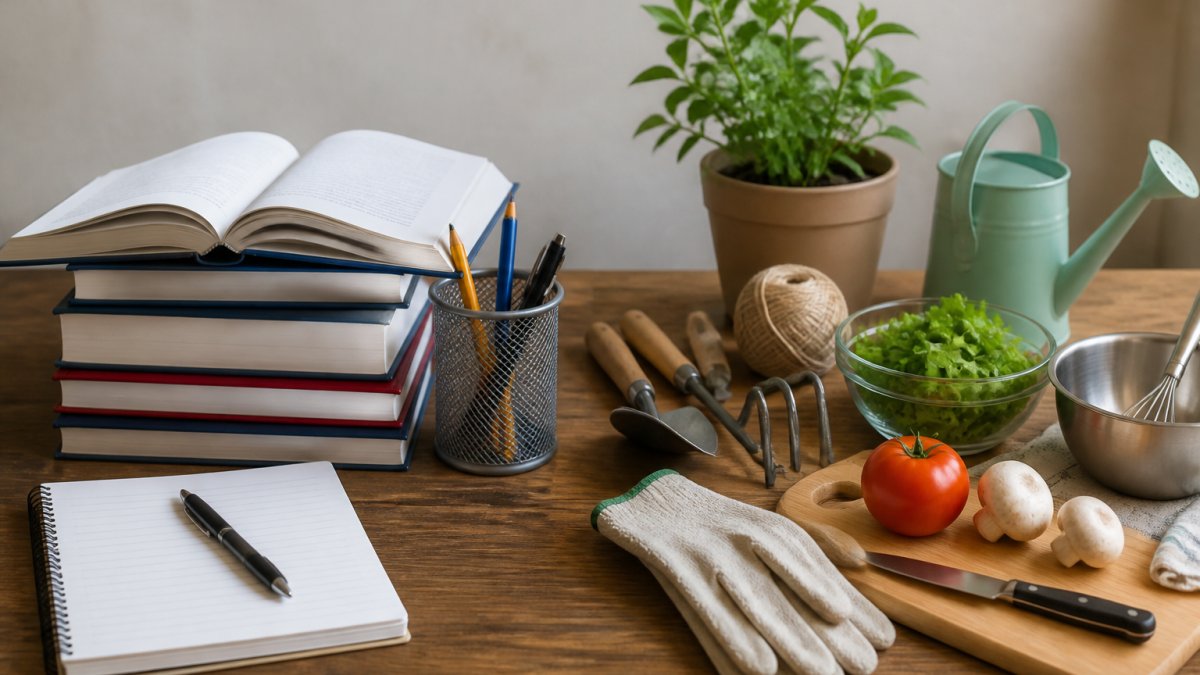
The debate between life skills education vs academic education is not about choosing one over the other. It is about recognizing that they serve different purposes and that both are necessary for a child to thrive. Academic education builds knowledge and credentials.
At Heroic Nepal, we work with families across Nepal and in the diaspora who want both for their children. Below, we break down what each type of education covers, where they overlap, and how families can make room for both without adding stress.
A common mistake is treating life skills as something children will "pick up along the way." In practice, they rarely do.
Defining Academic Education and Its Core Purpose
Academic education is the structured system of schooling that teaches subjects like mathematics, science, language, and social studies. Its core purpose is to develop intellectual capacity and measure it through grades, exams, and qualifications.
The UNESCO framework on education systems describes academic education as the foundation for advanced study and formal career pathways. It rewards memorization, analysis, and the ability to perform under timed conditions.
This system matters. Universities and colleges use academic records to decide who gets admitted. Employers use degrees to screen candidates.
Where academic education falls short is in preparing students for the unstructured problems of adult life: managing a household budget, handling conflict with a coworker, or staying calm during an earthquake.
Defining Life Skills Education and What It Covers
Life skills education is the deliberate teaching of practical and emotional capabilities that help people handle everyday challenges, from cooking a meal to managing money to resolving disagreements. It focuses on application rather than recall.
The World Health Organization identifies core life skills as decision-making, problem-solving, critical thinking, communication, interpersonal skills, empathy, and coping with stress. These are not abstract ideas. They show up every day.
Life skills education covers three broad areas:
- Practical daily skills: cooking, cleaning, basic repairs, using transport, staying safe
- Financial skills: budgeting, counting money, understanding credit, paying bills on time
- Social and emotional skills: communication, empathy, resilience, self-management, responsibility
Unlike academic subjects, life skills are learned through practice and real-life experience. A child does not learn to budget by reading about budgeting. They learn by managing a small allowance and making mistakes.
Life Skills Examples for Students: From Budgeting to Empathy
Life skills examples for students range from the very concrete to the deeply personal. What they share is that every one of them is usable outside a classroom.
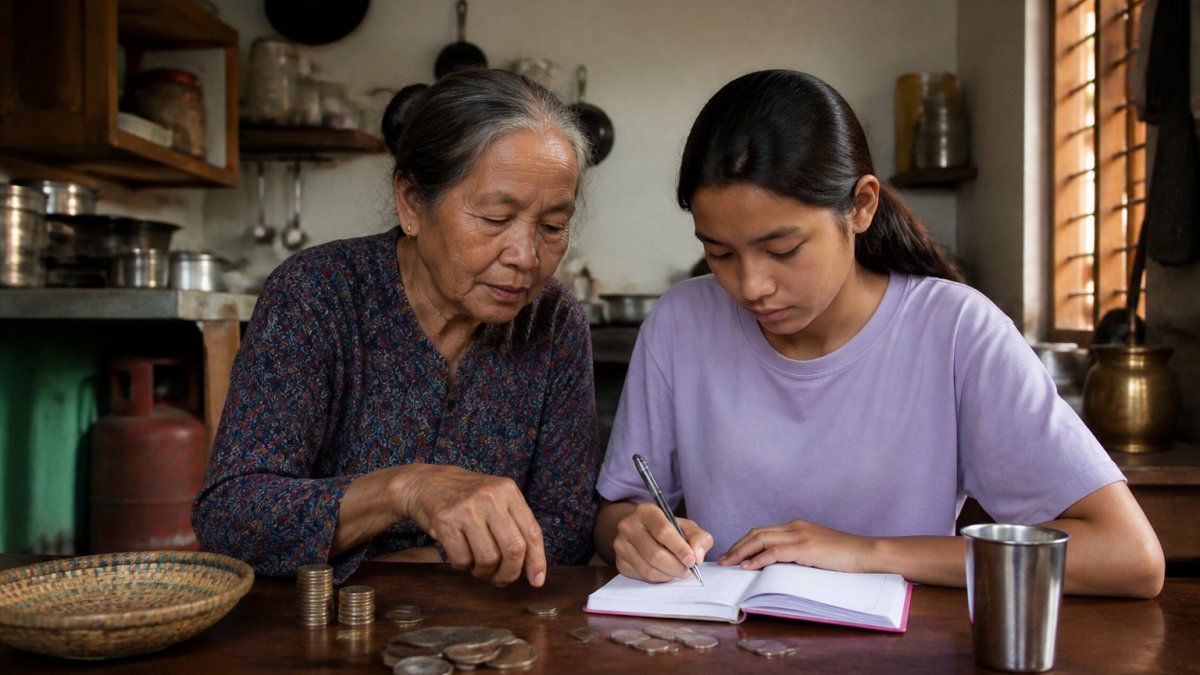
Practical Daily Skills: Cooking, Counting Money, and Paying Bills
A student who can cook a basic meal, count change accurately, and understand what a bill represents is already more independent than many adults. These skills build on each other.
Start with small tasks. Let a child help plan a meal and buy the ingredients. Give them a fixed amount and let them decide what fits. When they overspend, the lesson sticks better than any lecture.
Social and Emotional Skills: Communication, Empathy, and Resilience
These are harder to see but just as important. A young person who can express frustration without shouting, listen to a friend's problem, and recover from a setback will handle adulthood far better than one who cannot.
Role-playing, group games, and guided conversations help here. So does watching adults model these behaviors.
The Importance of Life Skills Education for Nepali Families
For Nepali families, the importance of life skills education goes beyond personal development. It is tied to economic stability and disaster readiness.
Nepal sits in a high-risk earthquake zone. Families that have practiced what to do during a quake, where to meet, and what supplies to keep are measurably better prepared.
There is also a practical economic case. Many Nepali young people enter adulthood without knowing how to open a bank account, negotiate a salary, or avoid predatory credit. These gaps cost real money over a lifetime.
Heroic Nepal was built around this gap. Our AI-driven, game-based learning platform develops critical life skills through play, and our 'triad' approach brings parents, grandparents, siblings, and local experts into the learning process together.
Comparing Learning Outcomes: Life Skills vs Academic Skills
The clearest way to understand the difference is to compare what each type of education actually produces. They are not competing for the same outcome, and they are not measured the same way.
| Dimension | Academic Education | Life Skills Education |
|---|---|---|
| Primary goal | Knowledge, credentials, and advanced study readiness | Application, independence, and daily functioning |
| Typical content | Mathematics, science, language, social studies | Budgeting, communication, cooking, conflict resolution, self-management |
| Teaching method | Direct instruction, textbooks, lectures, homework | Practice, modeling, role-play, real tasks, feedback |
| Assessment | Exams, grades, degrees, standardized tests | Observation over time, self-reflection, real outcomes, family feedback |
| Time horizon | Measured in terms and years | Measured in habits and milestones |
| Main strength | Opens doors to university and formal careers | Determines how well a person functions once inside those doors |
| Main weakness if alone | Knowledge without judgment; difficulty with unstructured problems | Confidence without credentials; limited access to formal pathways |
| Evidence base | Large-scale standardized testing and longitudinal credential studies | Growing body of program evaluations; more mixed and context-dependent |
Academic skills open doors. Life skills determine what happens once you walk through them. A student with strong academics but no self-management may struggle in a first job.
The evidence base is also different. Academic outcomes are easy to compare because exams produce numbers. Life skills outcomes are harder to standardize, which is why the World Health Organization frames them as core capacities rather than testable subjects.
The goal is not to pick a side. It is to build both, and to be honest about which one each activity is actually developing.
Teaching Life Skills in Schools: What Works and What Doesn't
Teaching life skills in schools works when the skills are practiced, not lectured. It fails when life skills are squeezed into a single class period or turned into another memorization exercise.
What works:
- Embedding skills into existing subjects. A math lesson on percentages becomes a lesson on interest rates and loans.
- Project-based learning. Students plan a real event, manage a real budget, and deal with real problems.
- Peer practice. Group games and role-plays let students try communication and conflict resolution in a safe setting.
- Involving families. Skills practiced at home stick far better than skills practiced only at school.
What does not work: adding a "life skills" module that is graded like any other subject and forgotten by the next term.
Common Mistakes in Life Skills Instruction
The biggest mistake is treating life skills as content to be delivered rather than habits to be built. A second mistake is separating them from the family. A child who learns budgeting at school but sees no budgeting at home will not adopt the habit.
A third mistake is making it feel like extra homework. If life skills education adds to a child's stress rather than reducing it, the approach is wrong.
Integrating Life Skills into the Curriculum: A Practical Age-by-Age Framework
Integrating life skills into the curriculum works best when the skills match the child's developmental stage. A five-year-old and a fifteen-year-old need very different lessons.
Here is how we would sequence it:
- Ages 5-8: Personal responsibility. Tidy up, follow routines, name emotions, share with others.
- Ages 9-12: Practical independence. Basic cooking, counting and saving money, simple first aid, asking for help.
- Ages 13-15: Financial and social skills. Budgeting an allowance, understanding credit, handling peer pressure, resolving conflict.
- Ages 16-18: Real-world preparation. Part-time work, paying bills, planning a budget, preparing for emergencies, civic responsibility.
This framework is not rigid. The point is that each stage builds on the last, and that the skills are practiced, not just discussed.
For families in rural areas with limited access to formal programs, a game-based platform can deliver much of this structure at home. Heroic Nepal's approach is designed to work with the family members already present, so a grandparent or older sibling can act as a mentor even without a trained teacher nearby.
How to Assess Life Skills Without Turning Them Into Another Exam
Assessing life skills without turning them into an exam means watching behavior over time, not testing knowledge once. The question is not "can they explain a budget?" but "do they keep one?"
Practical ways to assess:
- Observation over weeks. Notice whether the child actually cooks, saves, or resolves conflict without being told.
- Self-reflection. Ask the child to describe a recent decision and what they learned from it.
- Family feedback. Parents and siblings often see changes a teacher would miss.
- Real outcomes. Did the child save toward a goal? Did they handle a disagreement calmly?
This kind of assessment is messier than a test, but it measures what actually matters. A score of 90% on a life skills quiz means nothing if the child still cannot manage a simple budget.
Equity and Access: Making Life Skills Education Reach Rural Nepal
Access remains the biggest obstacle. Life skills education often depends on trained facilitators, and those are concentrated in cities. Rural families are left out.
This is where technology can help, but only if it is designed for real conditions. Spotty internet, shared devices, and low digital confidence are common in rural Nepal.
Heroic Nepal's hi-tech and hi-touch methodology is built around this reality. The digital layer delivers the learning; the human layer, through the family triad and community experts, ensures it lands.
The goal is not to replace schools. It is to make sure the skills schools often skip reach every family, not just the ones near a good teacher.
The gap between what children learn in classrooms and what they need in adult life is real, and it will not close on its own. Heroic Nepal brings AI-driven, game-based life-skills learning into the home, with a family triad of parents, grandparents, and local experts supporting each child, a tokenization model that gives donors and learners real ownership, and a focus on family preparedness that matters most when disaster strikes.
Frequently Asked Questions
What is the difference between life skills education and academic education?
Academic education focuses on subjects like maths, science, and language, measured through exams and grades. Life skills education develops practical abilities such as budgeting, cooking, communication, and decision-making that students use in daily life. Academic skills build knowledge; life skills build the ability to apply that knowledge in real situations. Both matter, but they serve different purposes in preparing young people for adulthood.
Why are life skills important for students in Nepal?
Many Nepali students leave school with strong exam results but limited preparation for everyday tasks like managing money, handling conflict, or responding to a disaster. Life skills education fills that gap by building confidence, problem-solving, and resilience. For families in rural areas or those affected by earthquakes and floods, these skills directly support survival, recovery, and long-term economic stability.
Can life skills education improve academic performance?
Yes, in many cases. Skills like self-management, critical thinking, and communication help students organise their study time, ask better questions, and handle exam stress. When students learn to set goals and manage their emotions, they often attend school more consistently and engage more actively in classroom learning. The two forms of education reinforce each other rather than compete.
How can teachers integrate life skills into academic lessons?
Start small. A maths lesson on percentages can include a budgeting exercise. A science class on water can involve a household hygiene plan. A language lesson can include a mock job interview or a community problem-solving discussion. The key is to connect the academic subject to a real-life task students already face or will face soon, so the skill sticks.