 blog
Life Skills Examples for Teenagers: Heroic Nepal's Guide
Table of Contents
- Why Life Skills Examples Matter for Teenagers
- Financial Literacy: Budgeting, Saving, and Money Management
- Practical Household Skills: Cooking, Cleaning, and Home Maintenance
- Time Management Skills for Students: Organization and Planning
- Communication and Interpersonal Skills for Teens
- Decision-Making Skills for Teens and Problem-Solving
- Health, Safety, and Emotional Regulation: Life Skills Teenagers Should Know Before 18
- Building Independence Through Life Skills Activities for Teenagers
- Frequently Asked Questions
Last Updated: October 9, 2026
Why Life Skills Examples Matter for Teenagers
Life skills examples for teenagers are the practical abilities that help young people become independent, confident adults. These aren't academic subjects you learn in a classroom. They're the real-world competencies that shape how teenagers handle money, relationships, emergencies, and daily responsibilities.
Think about what happens when a teenager moves out or faces a crisis. Can they cook a basic meal? Do they know how to budget? Can they calm themselves under stress? The answers to these questions determine whether they thrive or struggle.
At Rebuild Nepal, we recognize that life skills examples for teenagers form the foundation for success in adulthood. Through our Heroic Learning platform, game-based learning makes these skills stick. When kids practice budgeting, cooking, and problem-solving in engaging ways, with family members and mentors guiding them, they build real confidence and habits that last.
The teenagers and families using the Heroic Learning platform aren't just learning theory. They're building muscle memory for independence. They're developing the self-efficacy that carries them through challenges. And they're doing it together, strengthened by family involvement and expert guidance.
Financial Literacy: Budgeting, Saving, and Money Management
Financial literacy is the ability to understand money, earn it responsibly, and make smart decisions about spending and saving. For teenagers, this skill determines whether they'll graduate debt-free, build wealth, or struggle with financial stress.
The fundamentals start simple:
- Budgeting: Tracking income and expenses so money doesn't disappear without explanation
- Saving: Setting aside money for goals, emergencies, and future needs
- Understanding credit: Knowing how loans work and why interest matters
- Avoiding debt traps: Recognizing scams, predatory lending, and impulse spending
A common mistake is assuming teenagers will "just figure it out." They won't. Money management is a learned skill. Teenagers who practice budgeting with real or simulated income learn cause-and-effect faster than those who only hear lectures.
The Heroic Learning platform teaches money management through game-based scenarios. Kids allocate allowances, track spending, and see the consequences of choices, all in a safe environment where mistakes teach lessons instead of creating real financial damage.
Practical Household Skills: Cooking, Cleaning, and Home Maintenance
Household skills are the foundation of self-sufficiency. A teenager who can cook, clean, and handle basic home maintenance never has to depend on others for survival.
Essential household skills include:
- Cooking basics: Preparing simple, nutritious meals without relying on takeout
- Food safety: Storing, handling, and preparing food to prevent illness
- Cleaning and organization: Maintaining a livable space
- Laundry: Washing, drying, and caring for clothes
- Basic repairs: Changing a tire, sewing a button, fixing a leaky faucet
What most guides miss: teenagers learn these skills fastest through repetition with low stakes. Cooking the family dinner once a week builds competence far faster than watching videos. The goal isn't perfection, it's building the habit and the confidence to try.
The Heroic Learning platform integrates household skills into family activities. Kids and parents cook together, clean together, and solve problems together. This creates learning moments that stick because they're tied to real family life, not abstract instruction.
Time Management Skills for Students: Organization and Planning
Time management skills for students determine whether they juggle school, work, relationships, and personal growth, or collapse under the pressure. This is where executive functioning and planning come together.
Core time management skills include:
- Creating daily schedules: Breaking days into blocks for school, work, study, rest, and fun
- Setting priorities: Distinguishing urgent tasks from important ones
- Meeting deadlines: Planning backwards from due dates to avoid last-minute panic
- Balancing multiple commitments: Managing school, work, hobbies, and social life
- Building focus: Minimizing distractions during deep work
The thing nobody tells you about time management: teenagers don't fail because they're lazy. They fail because nobody taught them how to plan. Show a teenager how to work backwards from a test date, breaking study into daily chunks, and they'll stop cramming. Show them how to block their week, and they'll stop feeling overwhelmed.
In the Heroic Learning platform, teenagers practice time management through real scenarios. They plan their weeks, manage competing demands, and learn what happens when they don't prioritize. The game-based format makes the learning immediate and memorable.
Communication and Interpersonal Skills for Teens
Communication and interpersonal skills for teens are the abilities to express themselves clearly, listen actively, resolve conflict, and build healthy relationships. These skills determine whether teenagers can ask for help, advocate for themselves, and maintain friendships.
Key communication skills include:
- Active listening: Hearing what others say without planning your response
- Clear expression: Stating your needs and feelings without aggression or passivity
- Conflict resolution: Disagreeing without damaging relationships
- Empathy and social awareness: Understanding others' perspectives and emotions
- Asking for help: Overcoming shame and reaching out when struggling
Most teenagers have never been taught how to have a difficult conversation. They've watched adults do it, but they've never practiced. The result: they avoid conflict, bottle up frustration, or explode. Teaching them a simple framework, state the problem, explain how it affects you, ask for a solution, transforms their ability to navigate relationships.
The Heroic Learning platform builds communication skills through family dialogues and mentor interactions. Kids practice expressing themselves in safe environments with feedback. They learn that communication is a skill, not a personality trait.
Decision-Making Skills for Teens and Problem-Solving
Decision-making skills for teens and problem-solving are the abilities to analyze options, weigh consequences, and commit to choices. These skills determine whether teenagers make impulsive mistakes or thoughtful decisions.
Effective decision-making involves:
- Identifying the problem clearly: Understanding what you're actually deciding
- Listing options: Brainstorming possibilities without judging them yet
- Evaluating consequences: Thinking through what happens with each choice
- Making the choice: Committing to a decision and accepting responsibility
- Learning from outcomes: Reflecting on what worked and what didn't
A common mistake is letting teenagers face major decisions without a framework. They default to emotion or peer pressure. Teach them a simple process, define the problem, list three options, predict consequences for each, choose, and review, and they'll make better decisions about everything from friend groups to education to money.
The Heroic Learning platform teaches decision-making through scenarios where teenagers face realistic choices. They see consequences play out. They learn that decisions are reversible, which builds confidence to try.
Health, Safety, and Emotional Regulation: Life Skills Teenagers Should Know Before 18
Health, safety, and emotional regulation are the abilities to maintain physical wellness, respond to emergencies, and manage stress and emotions. These skills determine whether teenagers stay safe and mentally healthy.
Essential health and safety skills include:
- Basic first aid: Treating cuts, burns, and minor injuries
- CPR and emergency response: Knowing what to do when someone collapses
- Medication safety: Understanding how to take medicine correctly and identify side effects
- Sexual health: Understanding consent, contraception, and STI prevention
- Mental health awareness: Recognizing signs of depression, anxiety, and when to seek help
- Stress management: Using techniques like breathing, movement, and talking to calm down
- Sleep and nutrition: Understanding how these affect mood and performance
What most guides miss: teenagers need permission to prioritize their mental health. Many grow up thinking emotions are something to hide or "get over." Teaching them that emotional regulation is a skill, like cooking or budgeting, removes shame and builds resilience.
The Heroic Learning platform integrates health and emotional skills into daily life. Kids learn breathing techniques, practice problem-solving under stress, and develop awareness of their own patterns. Family members learn alongside them, creating a shared language for wellness.
Building Independence Through Life Skills Activities for Teenagers
Building independence through life skills activities for teenagers means creating structured practice opportunities where young people can try, fail safely, and succeed repeatedly. Independence isn't something that happens at eighteen.
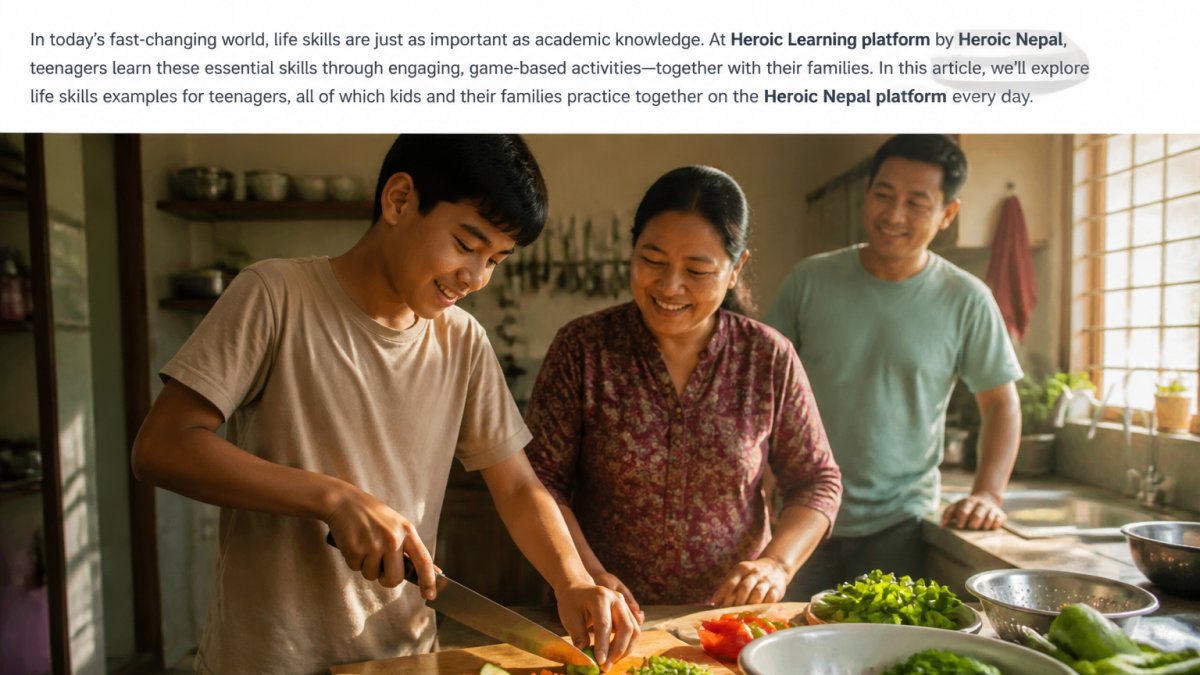
The most effective life skills activities for teenagers share common features:
- Real stakes, low consequences: Teenagers practice with actual responsibilities, but mistakes don't derail their lives
- Feedback and reflection: After each attempt, they review what worked and what didn't
- Family or mentor involvement: An adult guides without controlling, offering perspective and support
- Repetition: The same skill is practiced across different contexts until it becomes automatic
- Celebration of progress: Small wins build confidence and motivation
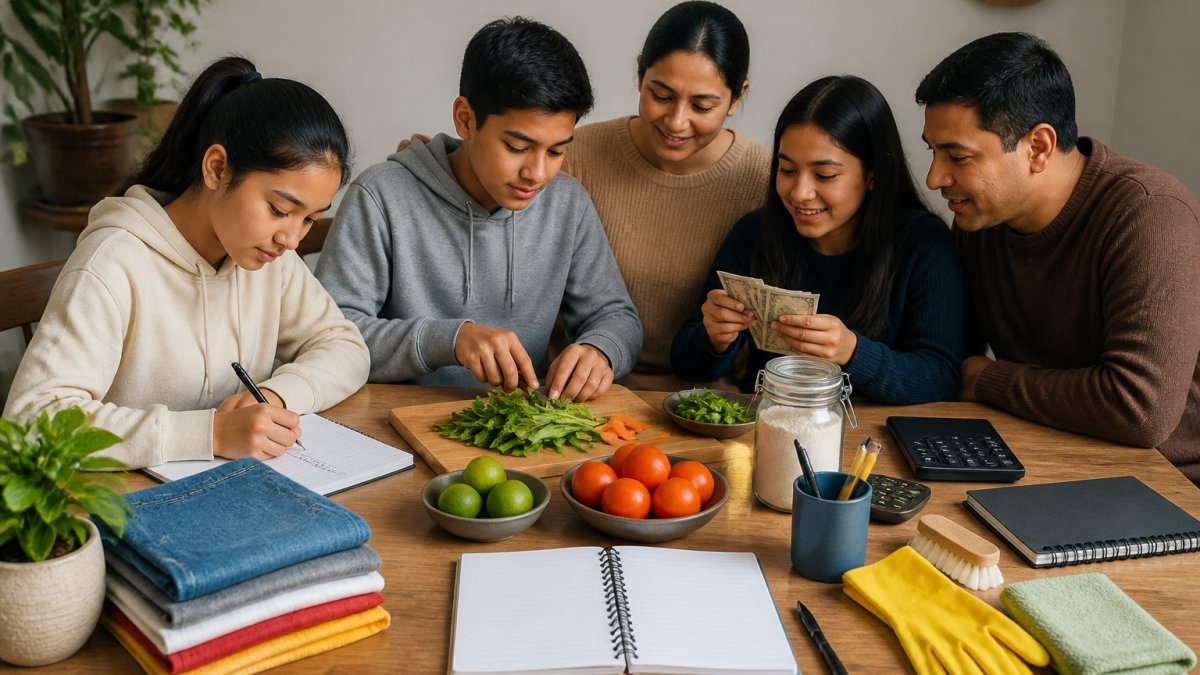
The Heroic Learning platform structures life skills activities for teenagers through game-based scenarios that mirror real life. Kids manage virtual budgets, cook with family members, solve problems with mentors, and track their progress.
A common objection from skeptics: "Will game-based learning actually prepare teenagers for real emergencies or real life?" The answer is yes, because the skills transfer. A teenager who practices decision-making in a game applies that same framework when facing peer pressure.
The families using the Heroic Learning platform find that teenagers start applying skills without prompting. They budget without being asked. They cook dinner without being told. They manage their time more effectively.
Teaching teenagers life skills examples isn't about checking boxes. It's about building the confidence and competence they need to navigate adulthood.
The real difference between teenagers who thrive and those who struggle often comes down to this: did someone teach them how? The Heroic Learning platform answers yes to all three. Research on adolescent development shows that teenagers develop skills fastest through active practice with guidance.
If you're a Nepali family in Nepal or part of the diaspora in the US, the Heroic Learning platform offers a pathway to build these skills within your own family structure. You're not outsourcing your teenager's growth to a school or app.
Frequently Asked Questions
What are the most important life skills examples for teenagers to learn?
The most critical life skills examples for teenagers include financial literacy (budgeting and saving), cooking and meal planning, effective communication, decision-making, time management, and basic health and safety knowledge. These skills build self-sufficiency and prepare teens for independence. Platforms like Heroic Nepal use game-based learning to make developing these skills engaging and practical, allowing teenagers to practice in realistic scenarios while building confidence.
What life skills activities for teenagers actually work best?
Hands-on practice activities work best for teenagers. Real examples include cooking a family meal, creating a monthly budget, planning a weekly schedule, having difficult conversations, solving household problems, and practicing first aid. The most effective life skills activities for teenagers combine immediate feedback, family involvement, and real-world application. Heroic Nepal's approach integrates these activities into a game-based platform where teens earn recognition for mastering skills alongside family members and mentors.
Which life skills should teenagers learn before turning 18?
Before age 18, teenagers should master budgeting and basic financial management, cooking nutritious meals, cleaning and organizing a living space, managing time effectively, communicating respectfully, making sound decisions independently, understanding online safety and privacy, recognizing and responding to health emergencies, and problem-solving without adult intervention. These life skills teenagers should know before 18 form the foundation for adult independence and resilience. Heroic Nepal's platform helps families systematically develop each skill through structured, age-appropriate learning.
How can teenagers improve their time management skills for students?
Teenagers improve time management skills for students by creating daily schedules, breaking larger projects into smaller tasks, identifying their peak productivity hours, using planning tools, and practicing prioritization. Start with a simple weekly schedule, track how time is actually spent for one week, then adjust. Remove distractions during focused work periods. Time management skills for students develop faster with accountability, working alongside parents or mentors helps teens stay consistent. Heroic Nepal's game-based approach makes planning and scheduling feel rewarding rather than restrictive.