 Listicle
Heroic Nepal: 12 Social Emotional Learning Activities at Home
Quick Summary
Social emotional learning, or SEL, is the process of recognising feelings, managing them, caring about others and working well with people. Families can build these skills at home through short daily activities such as feelings charades, turn-taking games, weekly check-ins and perspective-swap role-play. Most of this learning happens in everyday family moments.
- Feelings charades help young children connect feeling words with faces, bodies and situations in about 10 minutes.
- A weekly family check-in of 15 to 20 minutes lets each person share a high point, a low point and something they look forward to.
- Perspective-swap role-play asks each person to argue the other's side for two minutes, then name what that side got right.
- Belly breathing, with four counts in and six counts out, is practised when calm so it feels familiar during stress.
Table of Contents
- Why Social Emotional Learning Starts at Home
- Social Emotional Learning Activities for Kids Under Seven
- Family SEL Activities for Older Children and Teens
- Empathy Activities for Kids in Everyday Family Moments
- Self-Regulation Activities for Children During Big Feelings
- Adapting Activities for Different Ages, Needs and Communication Styles
- Start Your Family's Practice on the Heroic Learning Platform
- Frequently Asked Questions
Heroic Nepal: 12 Social Emotional Learning Activities at Home
Last Updated: October 28, 2026
Why Social Emotional Learning Starts at Home
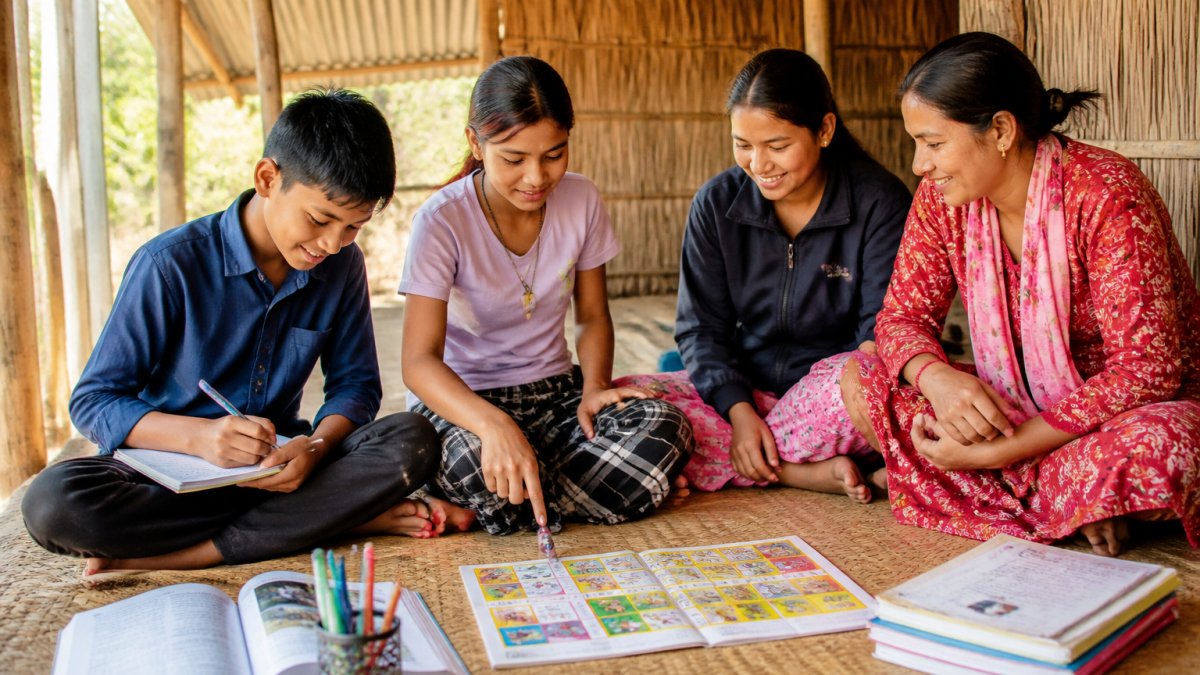
Children in Nepal learn how to handle feelings long before they reach a classroom. The activities in this guide are the same ones that kids and their families practise together on the Heroic Learning platform.
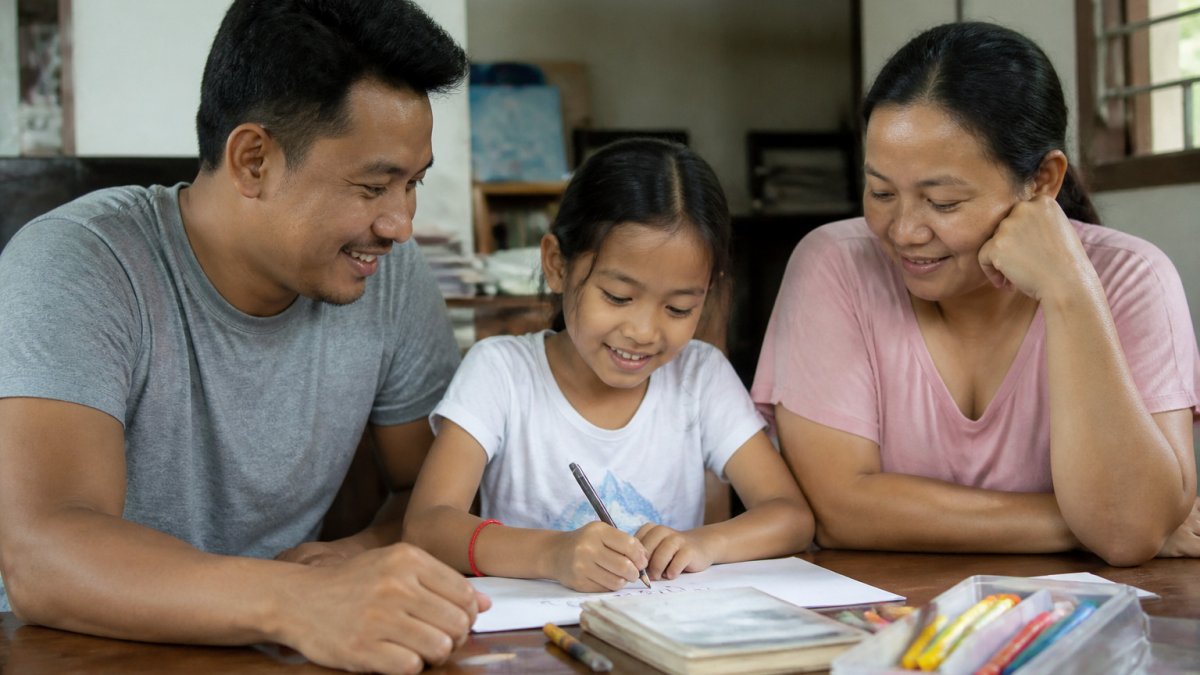
Social emotional learning, often called SEL, is the process of recognising feelings, managing them, caring about others and working well with people (What Is SEL?). Most of that learning happens during ordinary moments: a disagreement over a toy, a bad day at school, a meal where someone is quiet. Explore how Heroic Nepal supports the whole family in building these habits together. A family that turns these moments into small practice sessions gives children a steady place to build those skills.
This guide sets out activities grouped by age, with clear steps, materials and duration for each.
Social Emotional Learning Activities for Kids Under Seven
Young children learn emotion words through play and repetition. Short activities that happen daily.
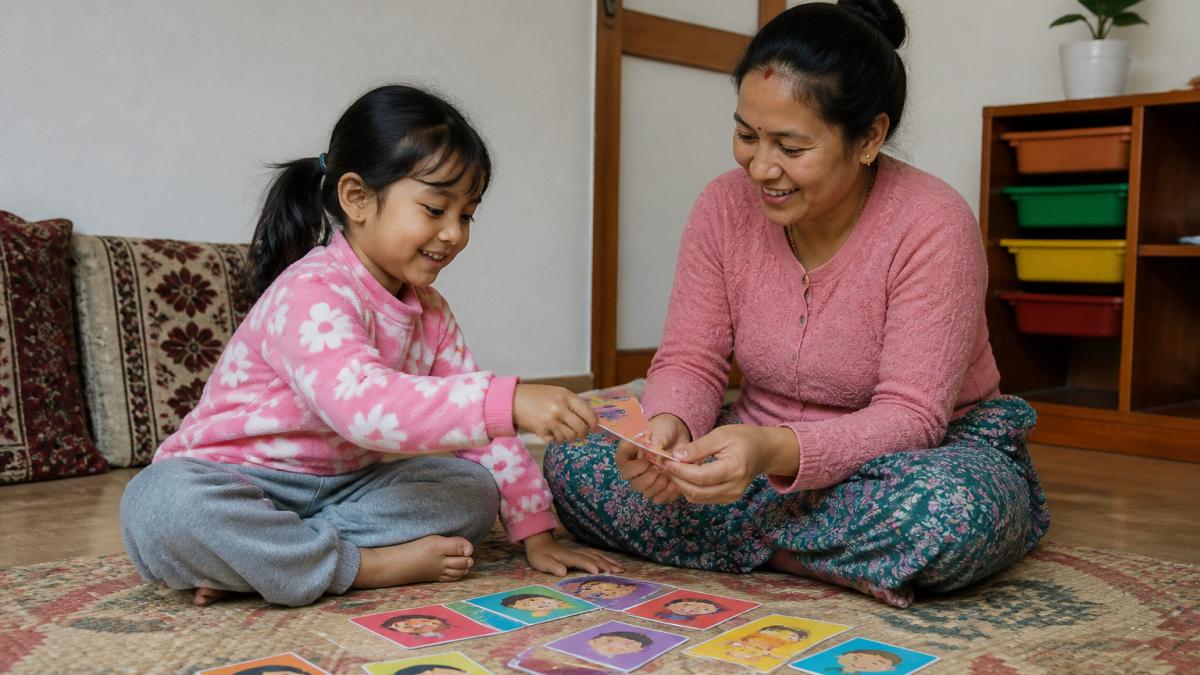
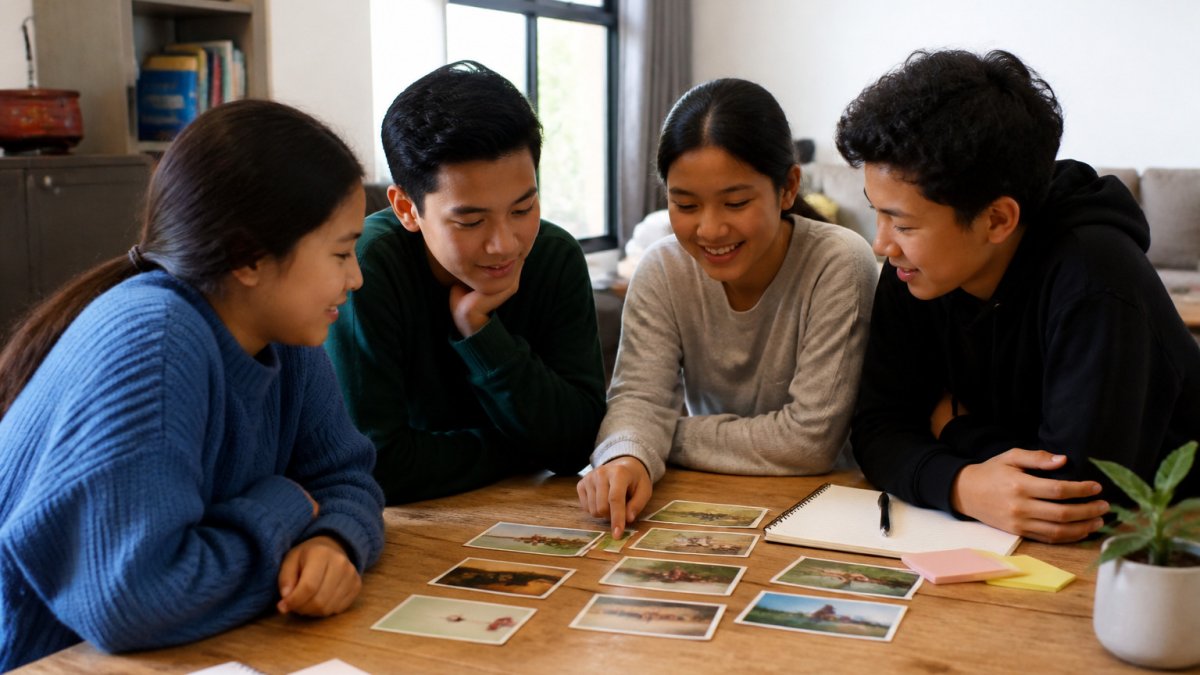
Feelings Charades and Naming Emotions
This activity helps children connect a feeling word with a face, a body and a situation.
What you need: A few small cards with feeling words such as happy, sad, angry, worried and surprised. No other materials are required.
How to do it:
- Take turns drawing a card. Do not show it to anyone else.
- Act out the feeling with your face and body only. Keep it gentle and safe.
- Everyone else guesses the feeling, then talks about a time they felt that way.
- Pause after each round to ask, "What helped you feel better?"
Plan for about 10 minutes. Children who find speaking hard can point to a picture of a feeling on a card instead of naming it. The aim is recognition, not a correct answer.
Turn-Taking Games at the Family Table
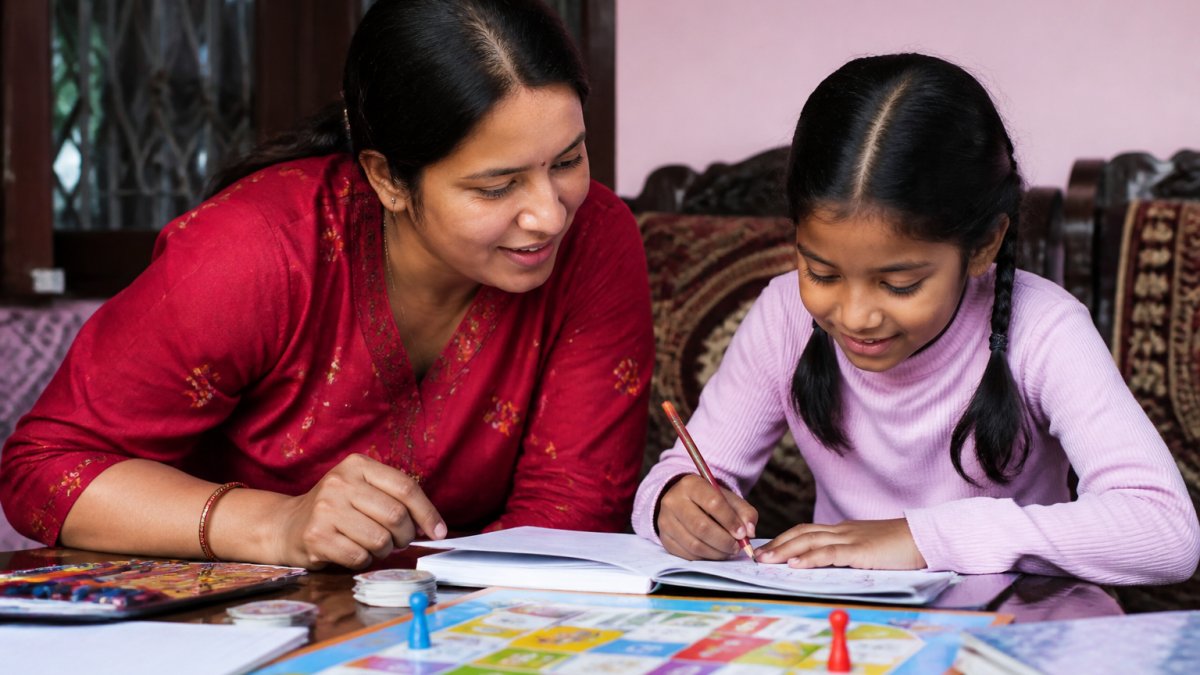
Waiting for a turn is one of the first real tests of self-control for a young child. Family games make that practice fun.
What you need: A simple board game, a deck of cards or a ball.
How to do it:
- Agree on a turn order before you start.
- Before each child moves, ask them to name how they feel about the game so far.
- When someone wins or loses, practise a short phrase together, such as "Good game" or "I want another try."
Give them a few seconds to manage the wait before you help.
Family SEL Activities for Older Children and Teens
The activities below are the same ones families practise together on the Heroic Learning platform.
Weekly Family Check-In
What you need: A notebook or a shared notes app, and a timer.
How to do it:
- Set aside one evening a week, ideally the same evening, for 15 to 20 minutes.
- Each person shares one high point, one low point and one thing they are looking forward to.
- The listener's only job is to ask one follow-up question and then say thank you. No advice, no criticism, no fixing.
- Rotate who goes first so the same person is not always leading.
Age adaptation: For children around eight to ten, keep each share to two sentences. For teens, allow silence, a teen who passes one week often speaks the next. Keep the tone light and the setting relaxed.
The Family Interview
What you need: Three to five question cards, or a list written on a phone.
How to do it:
- Each person writes one question about a recent emotional moment, such as "When did you feel proud this week?" or "When did you feel left out?"
- Pair up and take turns asking and answering for five minutes each.
- Come back together and each person shares one thing they learned about the other.
Why it works:
Perspective-Swap Role-Play
What you need: Nothing beyond a quiet space.
How to do it:
- Pick a recent low-stakes disagreement, a chore, a screen-time limit, a shared item.
- Each person argues the other person's side for two minutes.
- Afterward, each person names one thing the other person's side got right.
Plan for about 15 minutes. This activity builds perspective-taking and active listening.
Two-Minute Journaling Prompt
What you need: A notebook and a pen, or a notes app.
How to do it: Give one prompt and two minutes of quiet writing. Useful prompts include: "A moment I handled well this week was...", "Something I avoided this week was...", and "One thing I want to try differently is..." Sharing is optional. The writing is the practice; the sharing is a bonus.
What Progress Looks Like at This Age
Do not grade or label. Instead, notice small shifts: a teen names a feeling without being prompted, waits before responding in an argument, or asks a sibling how their day went. A simple notebook where you jot these down as family memories. If a teen declines to participate, offer the activity again another week rather than pushing it in the moment, declining once is not the same as refusing forever.
Empathy Activities for Kids in Everyday Family Moments
Empathy grows when children practise seeing a situation from another person's point of view. You do not need a special activity or a dedicated hour. The activities below are the same ones families use on the Heroic Learning platform.
The One-Minute Perspective Question
What you need: Nothing.
How to do it: When a sibling is upset, ask the child who is not involved, "How do you think she feels right now?" Then ask, "What might help?" Keep your own voice neutral and do not correct the first answer, even if it is wrong.
Duration: Under a minute. Age adaptation: For children under five, offer two choices, "Do you think she feels sad or angry?", rather than an open question.
Puppet or Stuffed-Toy Conflict Retelling
What you need: Two puppets, two stuffed toys, or two socks with faces drawn on.
How to do it:
- Act out a small conflict with the toys, one takes the other's turn, one is left out of a game.
- Ask the child to say what each toy might be feeling.
- Ask the child to show what the toys could do next.
Duration: 10 minutes. Why it works:
The Dinner-Table Empathy Round
What you need: Nothing beyond the meal.
How to do it: Once or twice a week, add one question to the meal: "Who did something kind today that you noticed?" or "When did someone need help today?" Each person answers, including adults. Keep it to one round so it stays light.
Duration: 5 minutes. Age adaptation: For teens, answer first yourself and keep your answer short.
Chore-and-Help Pairing
What you need: One shared household task.
How to do it: Pair two family members on a task, washing dishes, folding laundry, watering plants, and ask each person to notice one thing the other did that made the task easier. Say it out loud at the end.
Duration: The length of the chore.
Adapting for Different Communication Needs
For children who communicate without much speech, use pictures of faces or a simple choice board instead of open questions. For children who find group conversation overwhelming, run the perspective question one-to-one first. Keep sessions short and predictable, and give a clear signal when the activity is ending.
What Progress Looks Like
Do not grade or label. Notice instead: a child asks how a sibling is doing without being prompted, offers a toy without being asked, or names another person's feeling during a disagreement.
Self-Regulation Activities for Children During Big Feelings
Belly breathing: Ask the child to place one hand on their belly. Breathe in slowly through the nose for a count of four, then out through the mouth for a count of six. Repeat three times. Practise this when the child is calm, so it feels familiar during stress.
Name it to tame it: When a child is upset, help them name the feeling in a few words. Keep your own voice low and steady.
Movement break: A short walk, a few jumps or stretching with arms overhead.
Watch out: do not treat calming techniques as a punishment or a requirement to stop being upset. A child who declines to do a breathing exercise is still learning. Offer the activity again later rather than pushing it in the moment.
The article's self-regulation techniques, at a glance:
| Technique | Best for | How it works |
|---|---|---|
| Belly breathing | Calming the body | In through the nose for four, out through the mouth for six; repeat three times |
| Name it to tame it | Putting feelings into words | Help the child name the feeling in a few words, in a low, steady voice |
| Movement break | Releasing energy | A short walk, a few jumps or stretching with arms overhead |
Adapting Activities for Different Ages, Needs and Communication Styles
Every child is different, and some activities will need changes to suit them. Adjust the length, the materials and the way you ask questions.
Progress does not need grades or labels. Instead, notice small changes: a child names a feeling without prompting, waits a little longer for a turn, or asks how a sibling is doing. Write these down in a simple notebook as family memories rather than scores.
Start Your Family's Practice on the Heroic Learning Platform
Families who want more structure can join the Heroic Learning platform. Get started with the steps, QR code and link to join. The activities are part of the same approach used by kids and their families on Heroic Nepal, which combines game-based learning with support from parents, grandparents, siblings and subject matter experts.
Start with one or two activities this week and build from there.
Frequently Asked Questions
What are some social emotional learning activities to do at home?
Families can start with simple routines: naming feelings at dinner, playing turn-taking games such as card or board games, taking turns to tell a happy and a hard moment from the day, and using puppets to act out a small disagreement. The Heroic Nepal platform is used by children and their families.
How can parents teach emotional intelligence at home?
The Heroic Nepal approach involves parents, grandparents, siblings and subject matter experts.
How can I adapt SEL activities for different ages?
For younger children, keep activities short, physical and visual, using picture cards and movement games. For older children and teens, move toward discussion, journaling and problem-solving, such as talking through a conflict with a friend and considering the other person's view. Adjust the length and the difficulty rather than the purpose, and let the child choose the format where possible. Children who communicate differently may respond better to drawing, gestures or written prompts than to spoken questions.
What should I do if my child does not want to join an SEL activity?
Do not force participation. Stay calm, name the reluctance without judgement (for example, 'It seems this feels boring right now'), and offer a smaller role, such as choosing the cards or being the scorekeeper. Try again later with a different activity or a shorter version. Refusing is itself information about the child's energy or stress level, and a short break is often enough to reopen the activity.