 How-to
How to Build Disaster Life Skills With Heroic Nepal
Quick Summary
Disaster life skills are everyday habits such as spotting hazards, making a family plan and staying calm, learned at home before an emergency. On Heroic Nepal, kids and their families practice these skills together through short game-based activities. Practice turns knowledge into reflex when a flood, earthquake or landslide hits.
- Families should practice a family disaster preparedness plan, including two meeting points and an out-of-area contact.
- Children progress through four stages: notice hazards, decide actions, practice physically, then teach back to others.
- Score each skill from 0 to 3, and a child is ready to move on at 2.
- Run a monthly power-out night drill using household items like a torch, bucket and whistle.
- Use slow breathing and grounding techniques so children can calm down during stress.
Table of Contents
- Why Disaster Life Skills Start Before the Disaster
- How Heroic Nepal's Families Learn These Skills Together
- Writing a Family Disaster Preparedness Plan
- Teaching Disaster Preparedness Skills for Children
- Flood Safety Checklist for Families
- Supporting Children's Emotional Resilience After Disasters
- Start Your Family's Preparedness Practice This Week
- Frequently Asked Questions
How to Build Disaster Life Skills With Heroic Nepal
Last Updated: November 7, 2026
Why Disaster Life Skills Start Before the Disaster
Disaster life skills are the everyday habits that keep a family calm, safe and useful when a flood, earthquake or landslide hits.
Most families in Nepal know a disaster can strike. Far fewer have practiced what to do.
Life skills education helps here. It builds the thinking habits that matter in a crisis, such as spotting hazards, making a quick decision and staying in touch with others.
Here are the core skills this guide focuses on:
- Spotting hazards at home and on the way to school
- Making a plan and sharing it with everyone
- Staying calm and communicating during stress
- Helping younger family members and neighbors
How Heroic Nepal's Families Learn These Skills Together
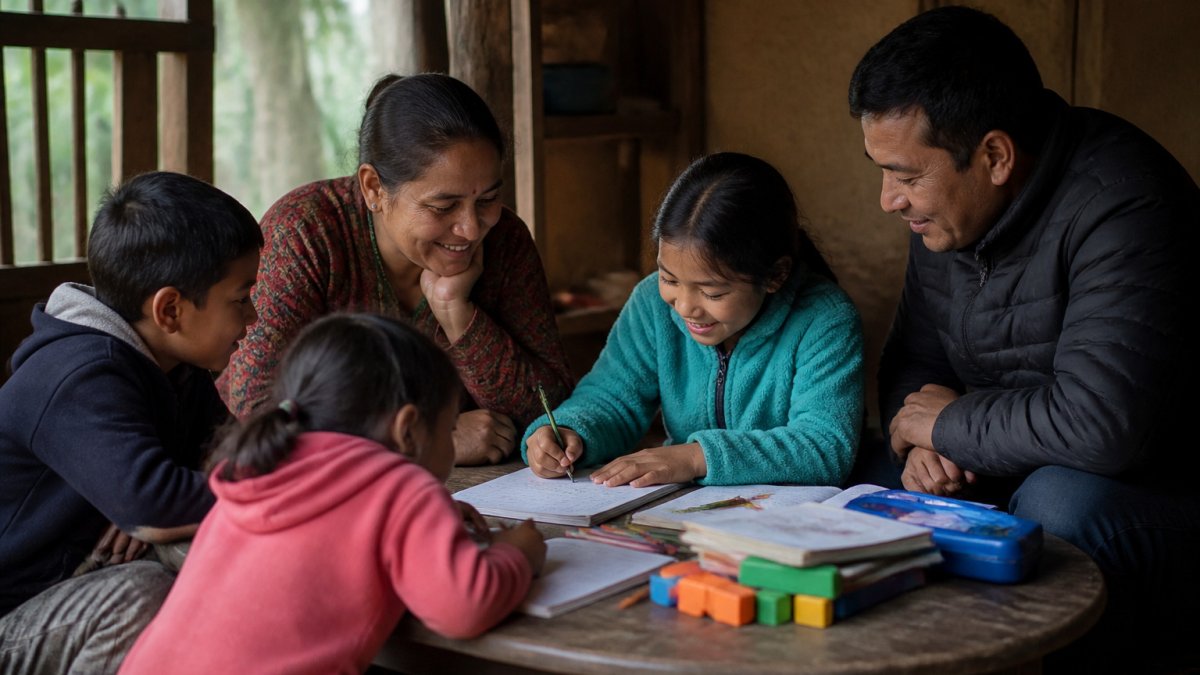
On Heroic Nepal, children and their families do the lessons together. The platform uses games and short activities, and parents, grandparents, siblings and a subject expert each take part.
Each family works through a sequence of activities at its own pace. A child might identify a hazard in a game, then the family walks through the same spot at home.
The process works best when families:
- Set a regular weekly time for activities
- Let each member take a turn leading one activity
- Talk through what they would do differently next time
Writing a Family Disaster Preparedness Plan
A family plan is a written page that answers three questions: where we meet, how we reach each other, and what we do first. Keep it short enough to read in one minute.
Include these items:
- Two meeting points, one near home and one outside the neighborhood
- A contact person outside the area everyone can call or message
- Emergency numbers and the location of the first aid kit
- Who checks on neighbors who need help
Post the plan where everyone sees it, such as the kitchen wall.
Teaching Disaster Preparedness Skills for Children
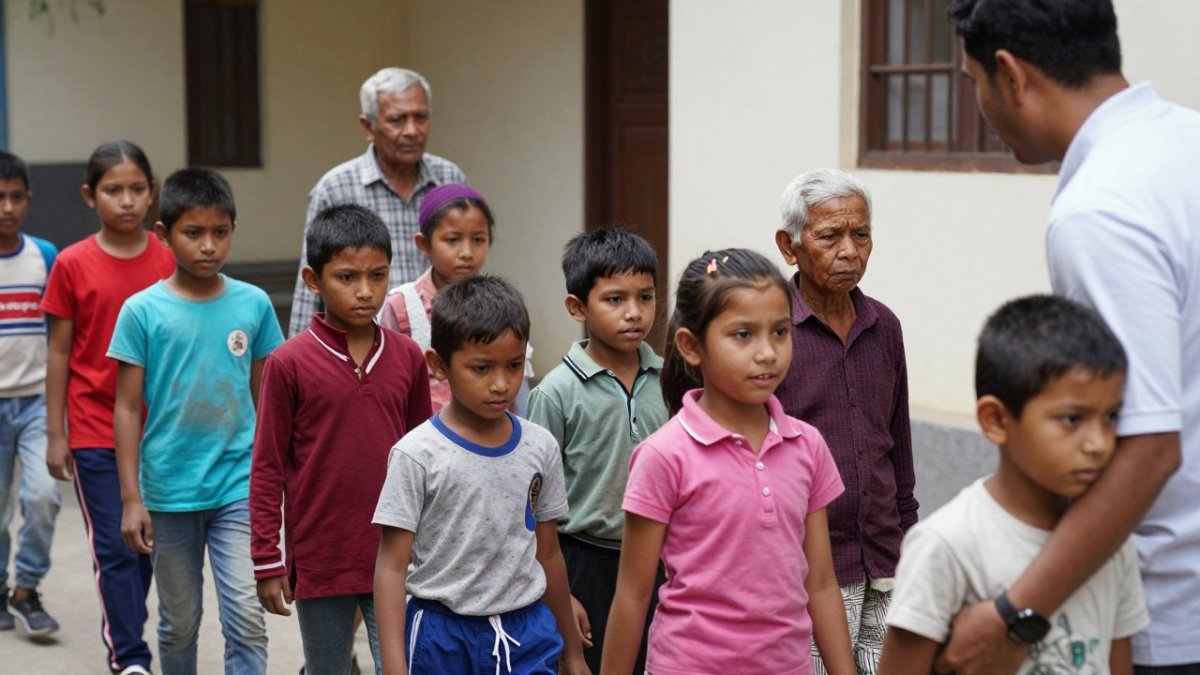
Children learn disaster skills the same way they learn to read: in a sequence, with repetition, and with someone checking that the skill actually landed. On Heroic Nepal, kids and their families work through activities together at home, and the platform's short game-based activities give children a place to rehearse before practicing the same steps in the real house. What follows is a sequence a family can run without a trainer present.
A Four-Stage Sequence With Learning Outcomes
Run the stages in order. Each stage should take one to two weeks of short sessions, and a family should not move on until the child can do the outcome without prompting.
- Notice (hazard identification). The child points out unsafe spots at home, on the walk to school and in the neighborhood, a loose shelf, a blocked drain, a cracked wall, a riverbank path. Outcome: the child names at least five hazards and says why each is dangerous.
- Decide (action choice). For each hazard, the child says what to do: move it, avoid it, tell an adult, or mark it. Outcome: the child matches a correct action to each hazard without help.
- Do (physical practice). Practice "drop, cover and hold," the route to the meeting point, and turning off the electricity main. Outcome: the child completes the action in under a minute and can repeat it on a second day.
- Lead (teach-back). The child explains one skill to a younger sibling or grandparent and runs one short family drill. Outcome: the child can teach the step accurately and correct someone else's mistake.
Adapting the Same Activities by Age and Ability
Treat learners as individuals, not one group. The same four stages work across ages if the task is scaled.
- Ages 3 to 5: "Find the safe spot" in one room; name each family member's job in one word. Keep sessions to 10 minutes.
- Ages 6 to 9: Draw a home map and mark two exits; walk the route to the meeting point; practice the electricity switch with an adult watching.
- Ages 10 to 13: Take a role in the family plan, checking drinking water, calling the out-of-area contact, checking on a neighbor. Let them lead one drill.
- Ages 14 and up: Build the family plan themselves, run a monthly drill, and brief younger children. This is where the skills connect to active citizenship.
Measuring Whether the Skills Stuck
Do not rely on a child saying "I know it." Use a simple before-and-after check the family can run itself.
- Pre-check: before starting, ask the child to show the meeting point and the electricity switch. Note what they cannot do.
- Competency rubric: score each skill 0 (cannot do), 1 (does with prompting), 2 (does alone), 3 (can teach it). A child is ready to move on at 2.
- Drill indicators: time to reach the meeting point, time to complete drop-cover-hold, and whether the child remembers the out-of-area contact number without looking.
- Confidence check: ask the child to rate how safe they feel during a drill from 1 to 5 before and after the sequence. Rising scores alongside rising rubric scores are the signal that learning, not just familiarity, has happened.
Watch out: a child who scores well in a calm drill may freeze in a real event, so repeat drills at different times of day and in different rooms rather than rehearsing one scripted scene.
Low-Cost Practice With What a Household Already Has
No equipment budget is needed. A bucket, a torch, a rope, a whistle and a cloth for a makeshift mask cover most drills. A family can run a "power-out night" once a month: lights off, torch found in the dark, meeting point reached, contact number recited.
The four-stage sequence below summarises what each stage asks a child to do and the outcome a family should check before moving on.
| Stage | What the child does | Outcome to check |
|---|---|---|
| Notice (hazard identification) | Points out unsafe spots at home, on the walk to school and in the neighborhood | Names at least five hazards and says why each is dangerous |
| Decide (action choice) | Says what to do for each hazard: move it, avoid it, tell an adult, or mark it | Matches a correct action to each hazard without help |
| Do (physical practice) | Practices drop, cover and hold, the route to the meeting point, and the electricity main | Completes the action in under a minute and repeats it on a second day |
| Lead (teach-back) | Explains one skill to a younger sibling or grandparent and runs a short family drill | Teaches the step accurately and corrects someone else's mistake |
Flood Safety Checklist for Families
Floods are a serious risk during the monsoon. Use this checklist to prepare before water rises:
- Know the highest safe ground near your home
- Keep important documents in a waterproof bag
- Store clean drinking water and dry food
- Turn off electricity at the main switch if water comes into the home
- Never walk or drive through moving water
Check the checklist once a month during the rainy season. Update it when the family changes.
Supporting Children's Emotional Resilience After Disasters
Most preparedness material stops when the shaking stops. The recovery phase is where families spend the longest, and it is where emotional skills decide whether a child rebounds or stays stuck. Psychological first aid, the set of simple, non-clinical steps a calm adult can take in the first days and weeks, is an important part of recovery. Families can prepare for these conversations during calm weeks so the words are ready when they are needed.
Psychological First Aid: The First 72 Hours
These steps are for any adult, not only health workers. They follow the widely used psychological first aid approach: look, listen, link.
- Look: check for immediate danger and for children who are alone, injured or separated from family. Reunite children with a caregiver before anything else.
- Listen: sit at the child's eye level, use a calm voice, and let them say as much or as little as they want. Do not demand a full account of what they saw.
- Link: connect the child to the people and routines that steady them, a parent, a sibling, a familiar meal, a known bedtime, a school reopening date.
Say what you know and admit what you do not. "The water has gone down and we are staying here tonight" is steadier than false reassurance.
Stress Regulation Techniques a Child Can Use
Teach these before a disaster, not during one, so they are already familiar.
- Slow breathing: in for four counts, out for six, five times. Practicing it during a calm week makes it usable under stress.
- Grounding by senses: name five things you can see, four you can touch, three you can hear. This pulls attention back to the present.
- A named safe place: the child pictures a place they feel secure and describes it in one sentence.
- A job to do: giving a child a small, real task, holding the torch, checking the water bottles, restores a sense of control.
Warning Signs and When to Seek Help
Normal distress after an event includes fear, clinginess, anger, trouble sleeping and replaying the event. Most of it eases as routines return. Seek help from a trusted health worker or trained counsellor when any of the following lasts more than about four weeks or gets worse:
- Sleep or eating problems that do not settle
- Withdrawal from family, friends or school
- Repeated nightmares or constant re-enactment of the event in play
- Regression such as bedwetting or loss of speech in a previously fluent child
- Physical complaints, headaches, stomach aches, with no medical cause
Children often mirror adult distress, so steadying yourself is part of supporting them.
Connecting Emotional Skills to Recovery and Rebuilding
Emotional resilience is what lets a family take part in recovery: returning to school, repairing the home, and reviewing what to do differently next time. Give children a role in rebuilding, sorting salvaged items, drawing the new family plan, choosing the new meeting point, because participation is itself a coping mechanism. Close the loop by holding a short family review after the emergency passes: what worked, what frightened us, what we will change.
Start Your Family's Preparedness Practice This Week
Pick one skill from this guide and practice it with your family this week. Walk your escape route, write your plan or play one of the activities on Heroic Nepal. Small, repeated steps build the habits that protect families when it matters most.
Frequently Asked Questions
What life skills are most important during disaster relief?
The most useful skills are calm communication, basic first aid, knowing the household's evacuation route and meeting point, identifying hazards in the home and neighborhood, and making simple decisions under pressure. Families that practice these together tend to act faster when a flood or earthquake hits. Heroic Nepal's families, including children, grandparents, and local facilitators, work through these skills as repeated game-based practice rather than one-off lectures.
How can children learn to respond safely to disasters?
Children learn best through short, repeated practice with clear rules: where to go, who to find, what to carry, and when to call for help. Use role-play, timed drills, and simple games that reward correct choices. Keep sessions brief and positive so children feel capable rather than frightened. Pairing a child with a trusted adult during practice also makes the response feel familiar when a real emergency happens.
What should a family include in a disaster preparedness plan?
A family disaster preparedness plan should list the household's main risks, two evacuation routes, a meeting point outside the home, emergency contacts, a basic supply kit with water and medicines, and roles for each family member. Review the plan at least twice a year and after any local flood or landslide warning. Writing the plan together, including children and grandparents, makes it easier to remember and follow.