 Comparison
Life Skills Curriculum vs Traditional: Heroic Nepal Approach
Quick Summary
A life skills curriculum teaches practical competencies such as communication, decision-making, problem-solving and financial habits, while a traditional curriculum focuses on academic subjects and exam results. Neither works well alone, since subject knowledge gives life skills their reasoning and life skills give subjects a purpose beyond the exam.
- Traditional curricula measure subject mastery through written tests and grades.
- Life skills curricula measure observed behaviour and applied tasks in daily situations.
- Household budgeting can be taught as a maths unit or as an applied family decision task.
- Strong programmes run both approaches, with traditional units building skills and applied tasks giving them purpose.
- Life skills can be assessed with simple observation records kept separate from subject grades.
Table of Contents
- Life Skills Curriculum vs Traditional Curriculum: What Each One Teaches
- Side-by-Side Comparison: Goals, Methods and Outcomes
- Life Skills Curriculum Examples From Classrooms and Homes
- Life Skills Activities for Students: How Learning Happens Through Play
- Life Skills Lesson Plans for Teachers: Pros, Cons and Practical Fit
- Life Skills Assessment Methods and Measuring Real-World Readiness
- Choosing Your Next Step: Joining Heroic Nepal's Family Learning Triad
- Frequently Asked Questions
Life Skills Curriculum vs Traditional: How Heroic Nepal's Family Approach Fills the Gap
Last Updated: November 21, 2026
Life Skills Curriculum vs Traditional Curriculum: What Each One Teaches
Most Nepali students finish school able to recite formulas but unsure how to manage money, resolve a conflict, or make a hard decision at home. That gap is the core of the debate between a life skills curriculum and a traditional curriculum.
A traditional curriculum is organised around academic subjects such as mathematics, language, science and social studies. Its main goal is subject knowledge that students can show in examinations. A life skills curriculum is organised around practical competencies: communication, decision-making, problem-solving, self-management and financial habits. Its main goal is applying knowledge to daily situations.
Neither approach is complete on its own. Traditional subjects give students the vocabulary and reasoning that life skills depend on. Life skills give those subjects a purpose beyond the exam hall. The useful question is not which one to keep, but how the two can work together in a child's week.
Side-by-Side Comparison: Goals, Methods and Outcomes
The two curricula differ most in what they measure and how they teach. The table below summarises the main differences, and the sections that follow show how those differences play out by grade level and in a single lesson taught two ways.
| Aspect | Traditional Curriculum | Life Skills Curriculum |
|---|---|---|
| Main goal | Subject mastery and exam results | Practical competence in daily life |
| Typical method | Teacher-led lessons, textbooks | Hands-on activities, role-play, games |
| Who takes part | Mostly students and teachers | Students, parents, grandparents, mentors |
| Common measure | Written tests and grades | Observed behaviour and applied tasks |
| Time at home | Homework, limited | Built into family routines |
| Typical grouping | Whole class, fixed timetable | Small groups, flexible scheduling |
| Feedback loop | Termly reports | Immediate, in-the-moment correction |
Teacher-led instruction is efficient for transferring knowledge to large groups. Life skills learning usually happens in smaller groups or at home, where a child can practise a skill repeatedly. The trade-off is time: practical learning takes longer to show results, and it is harder to compare across schools with a single test.
How the balance shifts by grade level
The right mix is not the same at every stage. The balance between the two approaches shifts as children mature.
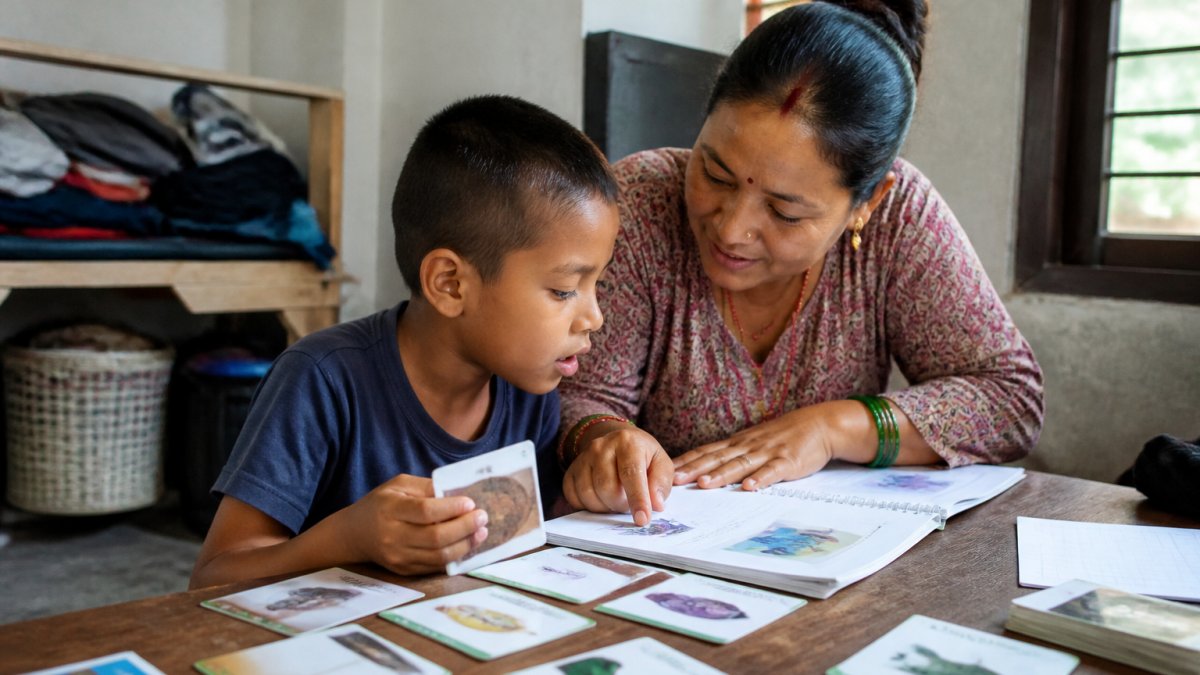
In the primary years, traditional curriculum carries most of the load because children need foundational literacy and numeracy. Life skills appear as short, embedded routines: taking turns in a group reading circle, counting change in a pretend shop, naming feelings during a classroom disagreement.
In the lower secondary years, subject content grows heavier, but life skills can attach to it. A social studies unit on local government becomes a role-play where students draft a request to a ward office. A science unit on water becomes a household hygiene audit.
In the secondary years, the traditional curriculum dominates because of board examinations, but the life skills that matter most are the ones that support exam performance and post-school transition: time management, asking for help, handling setback after a poor result, and understanding a first payslip or a household budget.
The same topic taught two ways
A concrete example makes the distinction clearer than any table. Take the topic of household budgeting.
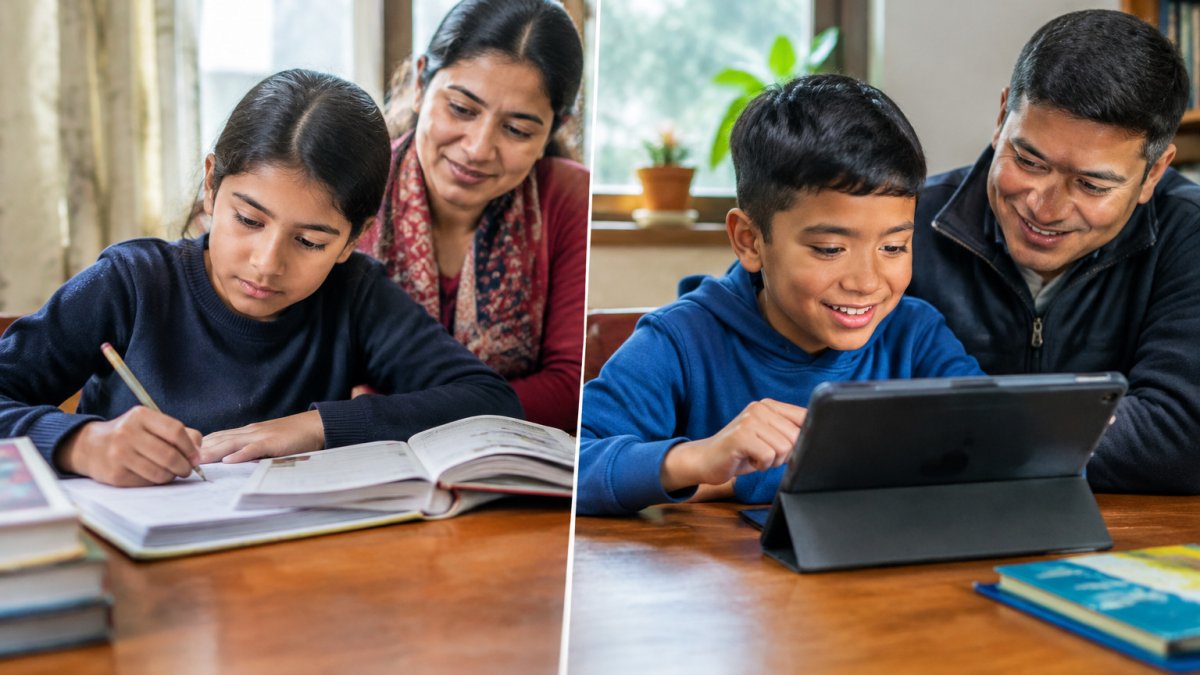
In a purely traditional treatment, the lesson is a mathematics unit on addition and subtraction. Students solve word problems from the textbook, the teacher marks the answers, and the unit ends with a written test. The knowledge is real, but it stays on the page.
In a life skills treatment, the same mathematics sits inside a task.
The second version takes longer to set up, while the first is faster to teach and easier to mark. Neither is wasted, and the strongest programmes run both: the traditional unit builds the arithmetic, and the applied task gives it a purpose.
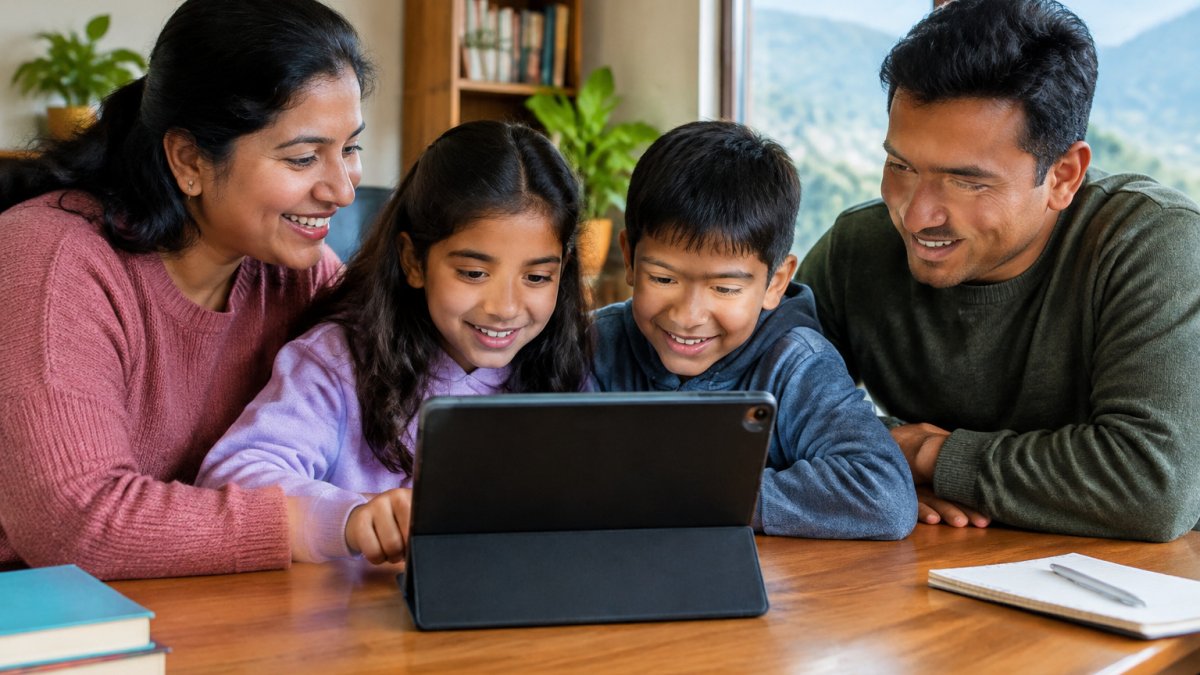
Many families weigh these trade-offs against limited budgets and busy schedules. On the Heroic Learning platform, children and their families run the applied version of these tasks together, which is how the comparison above plays out in practice.
Life Skills Curriculum Examples From Classrooms and Homes
A life skills lesson does not have to look like a separate subject. It can sit inside existing lessons. A maths teacher can ask students to calculate the cost of a family trip with a fixed budget. A language class can practise writing a polite request to a local office. A science lesson on water can connect to hygiene decisions at home.
At home, the same skills appear in ordinary moments. A parent might ask a child to plan the week's chores, or a grandparent might explain how to talk through a disagreement with a sibling.
Mental health support fits into these routines too. Simple check-ins and open conversation between family members help children name feelings before they become problems. Families who want to see how this support can be woven into everyday life can read more on the Mental Health: Everyday support between therapy sessions page.
Life Skills Activities for Students: How Learning Happens Through Play
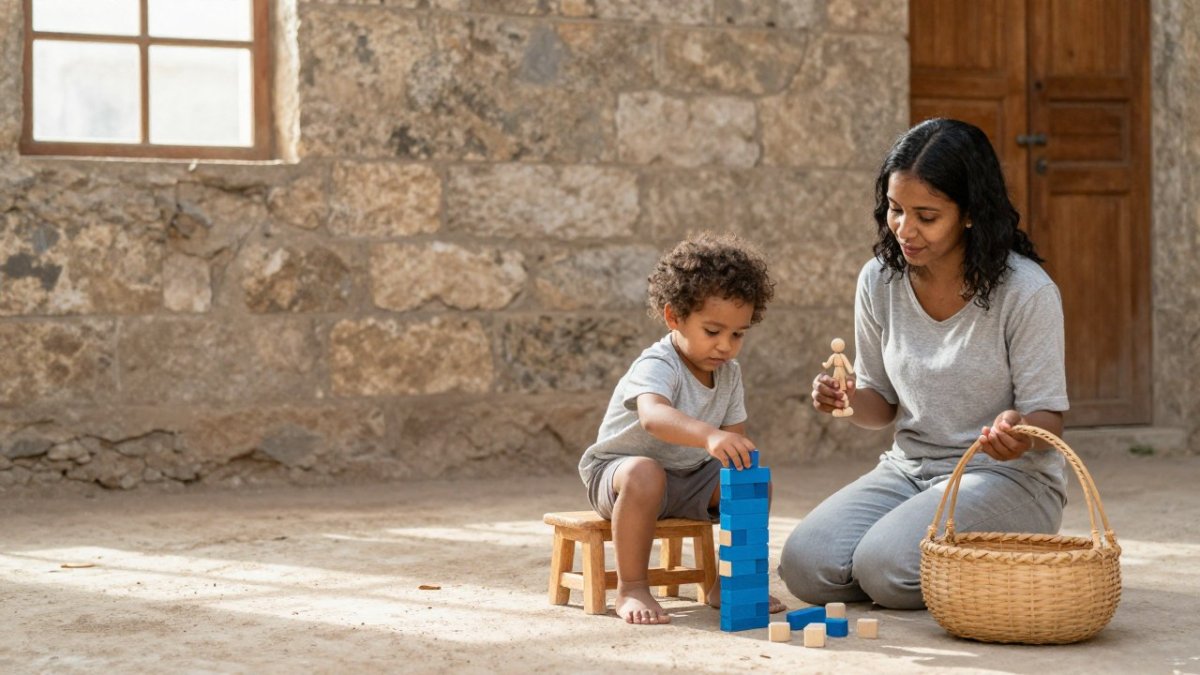
Children learn life skills most readily through play that feels like a game, not a lesson. Role-play a shop transaction to practise counting change. Take turns making decisions in a story game and discuss the consequences. Build a simple family budget using counters or seeds.
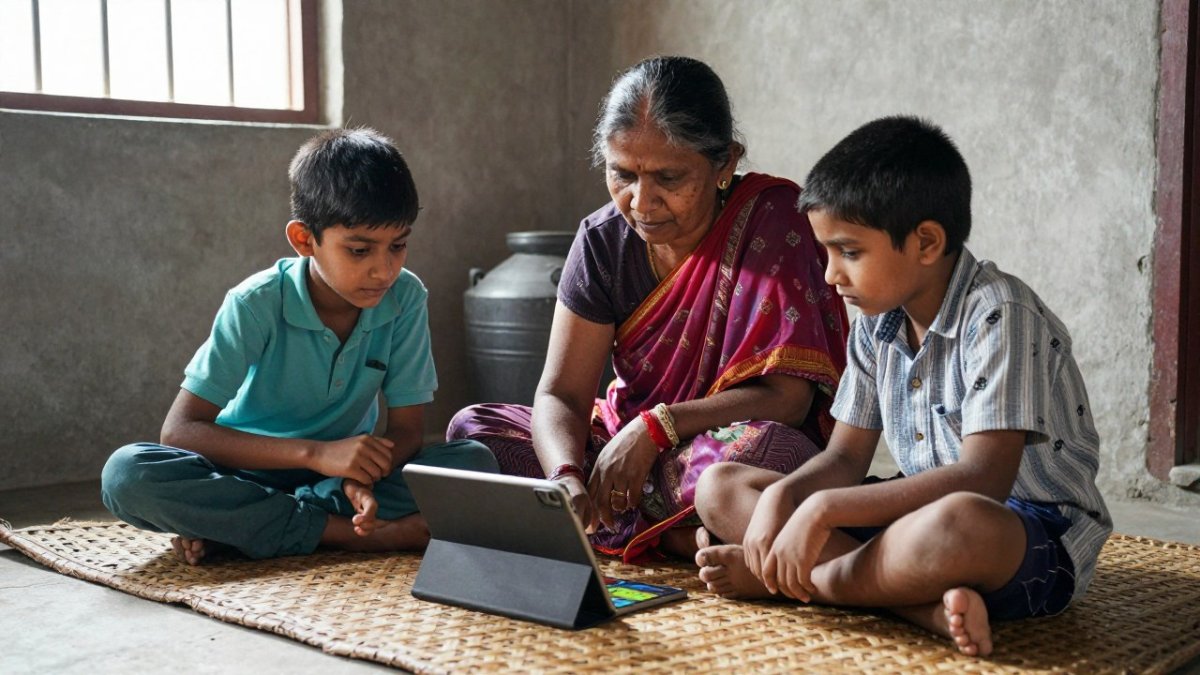
Financial habits form the same way. Repeated, small practice matters more than one big lesson. A child who tracks a little pocket money every week is building a habit that a single talk about saving will not produce. Families can explore these daily routines on the Financial Literacy: Daily habits build lasting agency page.
Play also builds the emotional side of learning. Children who practise taking turns, losing gracefully and asking for help in a safe game are better prepared when they face the same situations in real life.
Life Skills Lesson Plans for Teachers: Pros, Cons and Practical Fit
Teachers who want to see how a family-based platform runs these lessons in practice can look at the Heroic Learning platform, where children and their families work through them together.
Life Skills Assessment Methods and Measuring Real-World Readiness
Traditional tests cannot easily show whether a child can handle a conflict or manage a small budget. Life skills assessment usually relies on observation, practical tasks and reflection. A teacher might watch a group role-play, ask a student to explain a decision, or review a simple budget the child has kept for a month.
Measuring real-world readiness takes patience. Look for changes in behaviour over several weeks, not a single performance. Combine teacher observation with feedback from parents, who see the skills applied at home. Keep records simple so they can be reviewed each term.
No single method is perfect. Observation is flexible but depends on the observer's judgement. Written reflections are easy to collect but may favour stronger writers. Using several methods together gives a fairer picture of each child.
Assessing competencies alongside conventional grades
The harder question is how to report a life skill next to a subject mark without pretending the two are the same kind of thing. A workable pattern is to keep them separate on the report and describe each in plain language.
For collaboration, a teacher records whether the child invited a quieter peer into a group task, whether they disagreed without escalating, and whether they finished their share. A simple three-point scale, emerging, consistent, leading, is enough.
For financial literacy, the evidence is an artefact: a weekly budget the child kept, a record of pocket money tracked over a month, or a written explanation of a purchase decision. The teacher checks the reasoning, not the arithmetic alone.
For decision-making, the evidence is a reflection. The child names a choice they made, one alternative they considered, and what happened. A single paragraph per term is sufficient and takes minutes to review.
These records sit beside the conventional grade rather than replacing it. A child can score well in mathematics and still be emerging in collaboration; the report should say so honestly rather than averaging the two into a misleading single mark.
Keeping the record light enough to survive
The most common failure is a rubric so detailed that teachers abandon it by the second term. A practical rule is one page per child per term, with three competencies tracked and one line of evidence each. Parents can add a short comment from what they observed at home, which is often the most reliable signal because they see the skill applied outside the classroom.
Watch out: if the same adult both teaches and assesses without any second opinion, the record drifts toward what is easiest to observe rather than what matters. A brief cross-check with a parent or a second teacher corrects most of that bias.
On the Heroic Learning platform, this is exactly the loop that children and their families run: the child practises a skill at home, the family observes it, and the observation feeds back into the next week's task. That family-side evidence is what makes the assessment credible rather than a single teacher's impression.
Choosing Your Next Step: Joining Heroic Nepal's Family Learning Triad
The most effective life skills learning we have seen involves more than one adult. Heroic Nepal's triad approach brings together parents, grandparents, siblings and subject matter experts, so that children hear the same messages in several settings. Families who want to start can find out how to get involved on the how to get started page.
Whatever path you choose, begin with one small routine this week: a shared budget, a weekly family conversation, or one game-based lesson. Small, repeated practice is what turns a life skill into a habit.
Frequently Asked Questions
What is the difference between a life skills curriculum and a traditional curriculum?
A traditional curriculum is organised around academic subjects such as language, mathematics, science and social studies, and success is usually measured by subject test scores. A life skills curriculum focuses on abilities used in daily life, such as communication, decision-making, problem-solving, teamwork and handling emotions. Many families and schools find that the two approaches work best together: subject knowledge provides the foundation, while life skills show students how to apply that knowledge at home, at work and in their communities. Heroic Nepal's platform, used by children and their families, follows this combined approach through game-based activities at home.
What subjects are included in a life skills curriculum?
Life skills curricula usually cover communication, interpersonal relationships, self-awareness, emotional regulation, critical thinking, decision-making, personal finance basics, health and hygiene, and disaster preparedness. Some programmes also include digital literacy and basic family planning. Unlike traditional subjects, these topics are taught through practice, role play and real scenarios rather than only through textbooks. In the Heroic Nepal learning platform, children and their families work through these skills together, with parents, grandparents, siblings and local experts taking part in the triad approach.
Can life skills be taught alongside traditional academic subjects?
Yes. Life skills can be woven into existing lessons, for example by asking students to budget a school event in a mathematics class or to discuss a community health issue in a science lesson. Teachers can also set aside short weekly sessions focused purely on life skills. Integration works best when learning objectives are written for both academic and life-skill outcomes, so that neither area is pushed aside. Families can reinforce the same skills at home through the Heroic Nepal platform, where children and their families practise these habits together through game-based learning.
How can teachers assess life skills?
Teachers can use observation checklists, short performance tasks, self-reflection journals and peer feedback to assess life skills. For example, a teacher might watch how a student resolves a disagreement during group work, or ask students to plan a simple budget and explain their choices. Rubrics with clear levels such as beginning, developing and secure help make judgements consistent. Assessment should track growth over several weeks rather than rely on a single test, because life skills develop gradually through repeated practice.