 Comparison
Is Heroic Nepal's Life Skills Platform Worth It?
Last Updated: November 5, 2026
Quick Summary
The Heroic Nepal life skills platform is an AI-driven, game-based service that helps families teach practical skills like communication, decision-making and emergency preparedness at home. Parents, grandparents and siblings take part alongside children, so the learning happens together rather than alone on a screen.
- Families practise life skills together, with parents, grandparents and siblings taking part.
- Each activity presents a real scenario, a child's choice, a result and a family discussion.
- The disaster preparedness exercise ends with a one-page household plan the family keeps.
- Track three specific behaviours in a notebook over several weeks rather than judging one session.
- Check your internet connection quality before committing to regular sessions.
Table of Contents
- What Heroic Nepal Offers Families and Learners
- How the Game-Based Learning Works for Kids
- Life Skills Education for Children: What Gets Covered
- Life Skills Curriculum Examples Within the Platform
- How to Measure Life Skills Progress on the Platform
- Connectivity, Privacy and Support for Nepali Families
- Start Your Family's Life Skills Journey with Heroic Nepal
- Frequently Asked Questions
What Heroic Nepal Offers Families and Learners
Life skills are the practical abilities children use every day: communicating clearly, making decisions, managing emotions and preparing for emergencies. At Rebuild Nepal, we built the Heroic Nepal platform as a life skills platform to help families teach these skills at home. Much of what we cover in this review is done by the kids and their families together, inside the Heroic Learning platform.
The platform is an AI-driven, game-based learning service. Its core aim is to develop critical life skills and support family well-being. Families and learners can also take part in a tokenization model, which gives both donors and learners ownership in the programme.
Here is what sets the platform apart from a typical educational app:
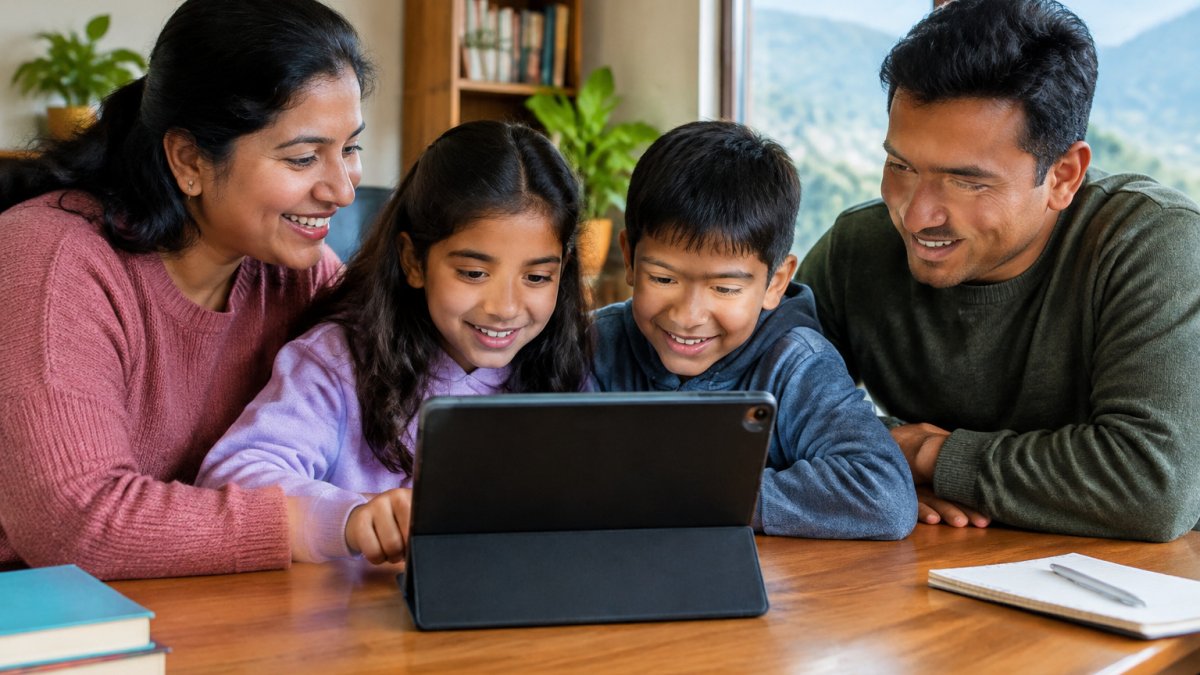
- Family involvement: Parents, grandparents and siblings take part, rather than the child learning alone on a screen.
- Community link: The service connects Nepali communities in the US and Nepal.
Families who have tried educational apps before often find that screen time alone does not change much at home. The Heroic Nepal approach puts the family at the centre of each activity.
Read the full description of the Heroic Learning platform here.
How the Game-Based Learning Works for Kids
Game-based learning uses play to hold attention while children practise a skill. In this platform, the games are the vehicle, and the skill is the destination. A child may work through a scenario, make a choice, see the result and then discuss it with a parent.
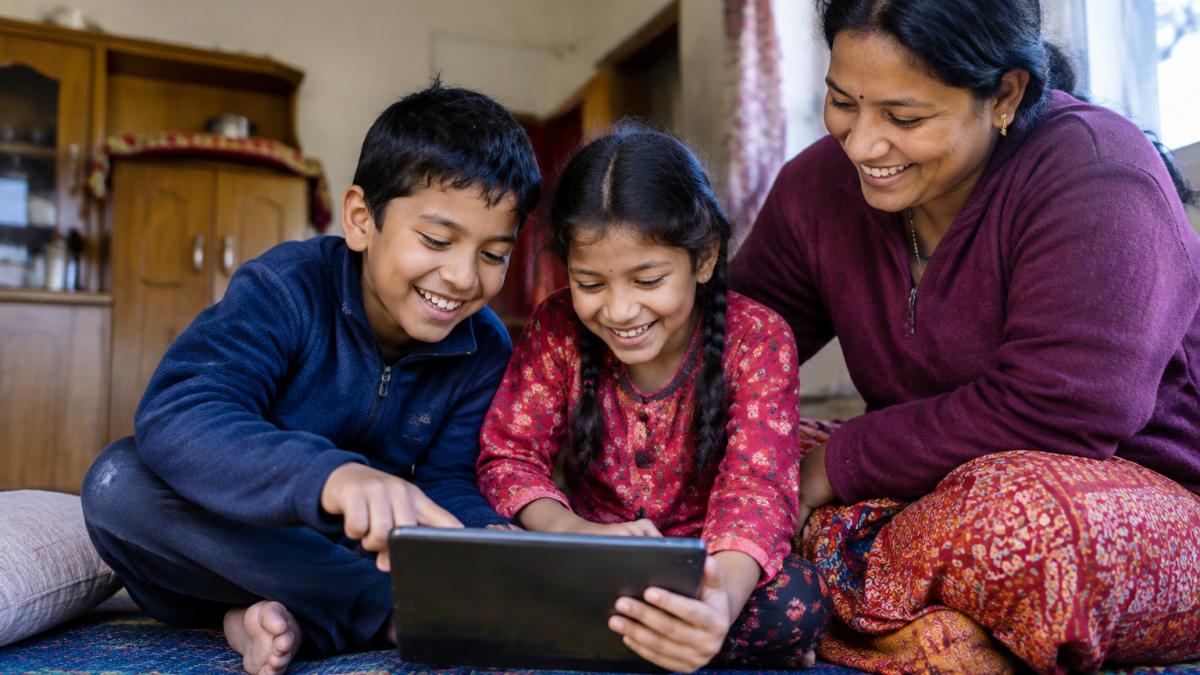
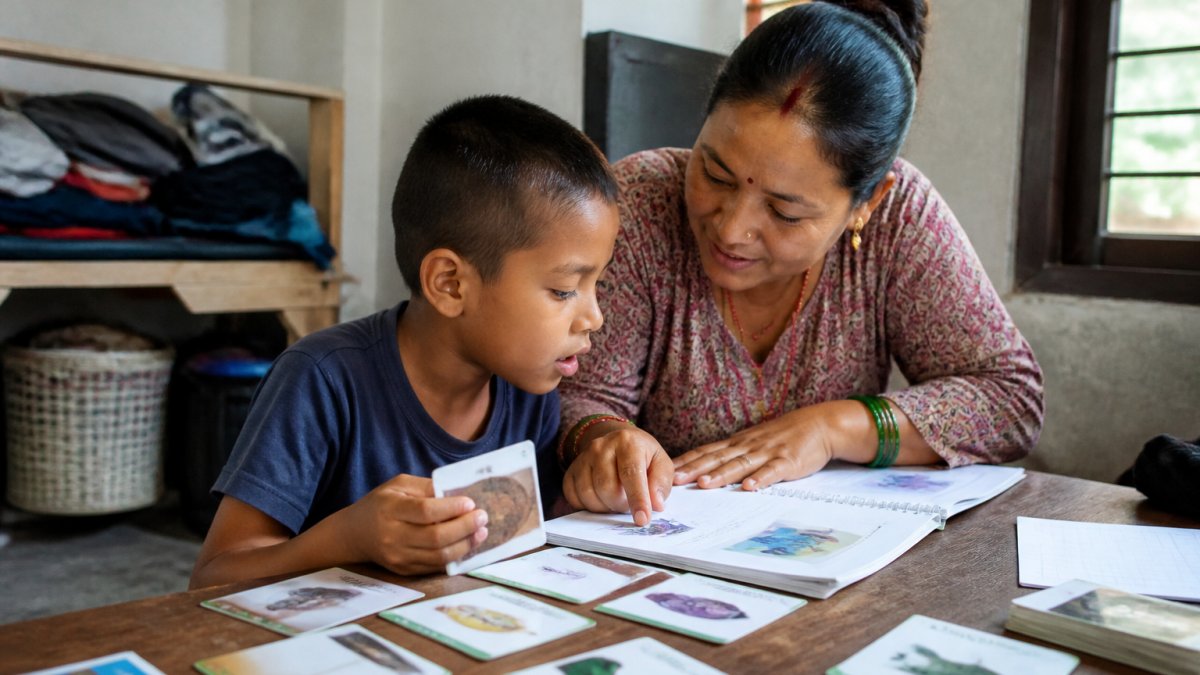
Nepali children and a parent can sit together at home and play through a lesson.
The Family Triad: Parents, Grandparents, Siblings and Experts
The platform is built around a triad: parents, grandparents, siblings and subject matter experts. Each person brings something different. Parents set goals, grandparents share lived experience and siblings add peer energy. Experts, where available, act as facilitators who guide the group.
See how family members take part in each learning activity.
Life Skills Education for Children: What Gets Covered
Life skills education covers far more than academic learning. It builds the habits that help children handle relationships, decisions and stress.
Compare life skills education with academic education in our 2026 guide.
Life Skills Curriculum Examples Within the Platform
A curriculum only proves itself in what a family actually does on a Tuesday evening. The platform's lessons are structured as short applied activities, each built around a real situation a household could face. The examples below show the pattern: a scenario, a decision, a consequence and a family conversation.
Preparedness and emergency planning. A family works through a disaster preparedness activity together, deciding where to meet, what to keep in an emergency bag and who to call. The game presents a disruption, a blocked road, a power cut, a missing family member, and the child chooses a response while the adult asks why. The output is a one-page household plan the family keeps. Our dedicated guide walks through this exercise step by step.
Read the Nepal family disaster preparedness training guide.
What separates this from a typical educational app is the debrief. A game alone rewards the choice; the family conversation turns the choice into a habit. A common pattern practitioners report is that families who skip the debrief see engagement without transfer, children enjoy the session but nothing changes at home. The platform's design assumes the adult is present, and the activities are written to be run in ten to twenty minutes.
See how family members take part in each learning activity.
How to Measure Life Skills Progress on the Platform
Most reviews of life skills platforms discuss effectiveness in the abstract and never tell a family how to check whether anything changed. This section takes the opposite approach: a practical measurement routine a household can run, plus an honest account of what the evidence can and cannot show.
Watch out: judging progress from one game session can mislead you in either direction, a single good session is not evidence of a habit, and a single bad one is not evidence of failure. Look for repeated changes across several weeks at home.
Keep the record simple. A notebook with a page per child, three behaviours and a date is enough. Families who build elaborate tracking systems usually abandon them within a month, and an abandoned system tells you nothing.
Compare life skills education with academic education in our 2026 guide.
The article gives a simple routine for tracking whether a child's life skills are changing at home.
| Step | What to do | Time or frequency |
|---|---|---|
| Keep a simple record | Use a notebook with one page per child | Set up once |
| Track three behaviours | Note three specific behaviours with a date | Several weeks |
| Avoid single-session judgements | Look for repeated change, not one good or bad session | Over several weeks |
| Keep it simple | Abandon elaborate systems; a basic record works best | Ongoing |
Connectivity, Privacy and Support for Nepali Families
Families in areas with unreliable internet should check connection quality before committing to regular sessions.
Privacy also matters, especially for relatives abroad who want to support family members at home. Families should ask the provider directly how personal information is handled.
Support is another practical question. The triad model involves parents, grandparents, siblings and subject matter experts, so families can plan who takes part.
Start Your Family's Life Skills Journey with Heroic Nepal
Life skills are built through repetition at home, not through a single lesson. The Heroic Nepal platform gives families a structured way to practise those skills together, with parents, grandparents and siblings taking part.
Get started with the Heroic Nepal platform and sign up here.
Frequently Asked Questions
What is a life skills learning platform?
A life skills learning platform is an online or app-based service that teaches everyday abilities such as communication, decision-making, problem-solving, money management and self-awareness. Heroic Nepal is one such platform, built around game-based lessons that children complete with their parents, grandparents, siblings and subject matter experts. Good platforms let families track progress and practise skills outside the screen, not just inside the app. When reviewing any platform, check whether it covers the skills your family actually needs and whether lessons connect to daily life at home.
What life skills can children learn online?
Children can learn communication, teamwork, emotional regulation, basic financial thinking, healthy routines and early problem-solving through online lessons. Heroic Nepal focuses on critical life skills that support success at school and at home, along with habits that support family health and wellness. The most useful online programmes pair each lesson with a short real-world task, so the skill is practised offline as well. Ask any provider to show you the list of skills covered before you commit time to it.
How does game-based life skills learning work?
Game-based learning turns lessons into missions, challenges and choices, so children practise a skill through play rather than reading about it. On Heroic Nepal, learners move through games that build life skills, and families are invited to join in, which turns the activity into shared practice. Check how often a game is refreshed and whether it asks children to reflect, not only to tap.
What should parents look for in a life skills learning platform?
Look for clear learning goals, age-appropriate content, a way to involve family members and a method for tracking progress over time. Check how the platform handles data privacy, whether it works on the connection you have at home, and who supports you if something goes wrong. Ask whether a trained facilitator or mentor is involved, because a adult guiding conversations usually makes lessons stick. A free trial or sample lesson is a sensible way to test fit before committing to anything.