 Listicle
Life Skills Education for Students: Heroic Nepal's Approach
Quick Summary
Life skills education helps students handle school pressure, relationships, and real-world decisions by turning values into repeatable habits. Heroic Nepal teaches these skills through practice that children and their families do together on the Heroic Learning platform. The benefits show up in classroom engagement, emotional wellbeing, and how young people recover from setbacks.
- Students who practise focus and self-management stay more engaged and organise homework better.
- Naming feelings and choosing a response makes a child far less likely to lash out.
- Practising stress management supports students through exam periods and family financial strain.
- Start with one skill for two to three weeks, practised during daily routines like meals and chores.
- Keep a simple log of the skill practised, what happened, and what changed, and review it monthly.
Table of Contents
- Why Life Skills Education Matters for Students Today
- Core Benefits of Life Skills Education for Students
- Examples of Life Skills for Students
- Life Skills Activities for Students That Work in Practice
- How to Teach Life Skills to Students at Home and in School
- Sample Life Skills Lesson Plans and How to Measure Progress
- Start Your Family's Life Skills Journey on Heroic Learning
- Frequently Asked Questions
Life Skills Education for Students: Heroic Nepal's Approach
Last Updated: November 17, 2026
Why Life Skills Education Matters for Students Today
Life skills education gives students the tools to handle school pressure, relationships, and real-world decisions. Heroic Nepal built its approach around this idea, and the life skills covered are practised by children and their families together on the Heroic Learning platform. UNICEF guidance on life skills-based education
Many families in Nepal notice the same pattern. A child can recite a lesson perfectly but freezes when a friend pressures them, a family argument escalates, or a flood warning arrives. Academic knowledge matters, yet it does not automatically teach a student how to communicate, manage stress, or make a sound choice under pressure.
This is the gap life skills education is designed to close. It turns abstract values into repeatable habits that children practise at home, in school, and within their communities.
Core Benefits of Life Skills Education for Students
Life skills education supports students in several connected ways. The benefits below show up in grades, in relationships, and in how young people face setbacks.
Academic performance and school engagement
Students who practise focus, goal-setting, and self-management tend to stay more engaged in class. See how the Heroic Learning platform delivers life skills education in practice. These skills help them organise homework, ask for help early, and recover from a poor test instead of giving up. WHO information on life skills and health promotion in schools
Heroic Learning, the platform used by children and their families, is designed to support these habits in everyday routines through game-based learning.
Self-esteem, emotional intelligence and wellbeing
Emotional skills help a student name a feeling, understand where it came from, and choose a response. A child who can say "I am angry because I was left out" is far less likely to lash out. Self-awareness also supports healthy self-esteem, because the child learns that setbacks are problems to solve rather than proof of failure.
Wellbeing grows from these habits too. Students who practise stress management and coping skills are better placed to handle exam periods, family financial strain, and disaster-related anxiety.
The table below sums up the main benefit areas the article describes and where each one shows up.
| Benefit area | What it looks like | Where it shows up |
|---|---|---|
| Academic performance | Focus, goal-setting, self-management | Homework, asking for help early, recovering from a poor test |
| School engagement | Staying engaged in class | Class participation and follow-through |
| Emotional intelligence | Naming feelings, choosing a response | Less lashing out, better handling of being left out |
| Self-esteem | Treating setbacks as problems to solve | Resilience after failure |
| Wellbeing | Stress management and coping skills | Exam periods, financial strain, disaster-related anxiety |
Examples of Life Skills for Students
Life skills fall into a few practical groups. Each one can be taught at home, in a classroom, or through structured family activities.
- Communication: listening fully, asking clear questions, and expressing needs respectfully
- Critical thinking: comparing options, checking sources, and spotting flawed reasoning
- Problem-solving: breaking a problem into steps and testing solutions
- Decision-making: weighing risks and consequences before acting
- Emotional regulation: pausing, breathing, and choosing a response
- Collaboration: sharing tasks, resolving conflict, and respecting different views
- Preparedness: knowing family meeting points, emergency contacts, and basic safety steps
Each skill connects to the others. A student who can communicate clearly is better at resolving conflict, and a student who plans ahead handles emergencies with less panic.
Life Skills Activities for Students That Work in Practice
The most effective activities are short, repeatable, and involve more than one person. What separates a useful activity from a forgettable one is a clear learning objective, a reflection step, and an adaptation for the age group in front of you. Below are four activities grouped by grade band, each runnable in a home room or a classroom with no special materials.
Lower primary (Grades 1-3): Feelings Charades
Objective: Name and recognise emotions in self and others.
One child draws a feeling card (happy, worried, angry, left out, proud) and acts it out without speaking. The group guesses the feeling, then each person shares a time they felt the same way. Run it for 10-15 minutes.
Adaptation: For children who are shy or have speech difficulties, let them point to a feelings chart instead of speaking. For mixed-language classrooms, draw the feeling rather than label it.
Upper primary (Grades 4-6): The Broken Bridge Challenge
Objective: Practise collaboration, listening, and shared problem-solving.
Small groups receive a simple scenario, a bridge on the route to school has washed out and the group must agree on an alternative route using only the information on three clue cards. Each member holds one card and must be listened to before the group decides. Debrief with two questions: Who was heard? Who was interrupted?
Adaptation: For larger classes, run parallel groups of four to six. For children with limited literacy, read the clue cards aloud.
Lower secondary (Grades 7-8): Source Check Relay
Objective: Build critical thinking and digital and media literacy.
Give each group three short claims, one from a trusted public health notice, one from a forwarded social media message, and one that is clearly exaggerated. Groups rank the claims by reliability and must state the evidence they used. Evaluating information online is an important life skill for this age group.
Adaptation: Use local examples such as flood warnings or exam-result rumours so the skill connects to real decisions.
Secondary (Grades 9-10): The Two-Minute Decision
Objective: Practise decision-making under time pressure and reflect on consequences.
Present a realistic dilemma, a friend asks you to share an answer during an exam, or a family member asks you to spend savings on a risky scheme. Students have two minutes to decide and one minute to explain the trade-offs they weighed. Rotate through three dilemmas.
Adaptation: For students who freeze under pressure, allow a written response first, then a spoken one.
Why these work
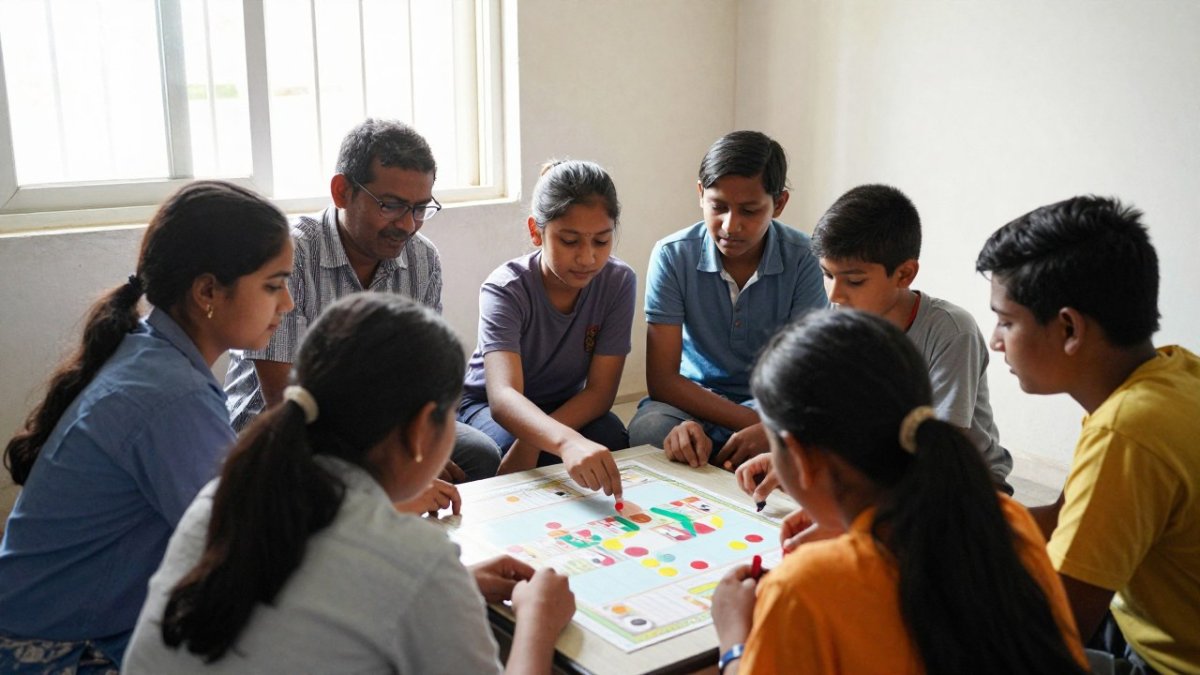
Each activity combines practice with reflection, and each has a named objective so a parent or teacher can tell whether it landed. Families using the Heroic Learning platform can run these activities regularly and rotate the skill focus.
Watch out: An activity without a reflection step becomes entertainment. If the group skips the "what did you notice?" question, the skill rarely transfers to daily life.
How to Teach Life Skills to Students at Home and in School
Teaching works best when adults model the skill before asking children to use it. Parents, grandparents, older siblings, and local facilitators can each take a role. But most implementation efforts fail for predictable reasons, and naming those reasons up front is what separates a plan that survives the school year from one that fades by the second term.
Start small and sequence the skill
Choose one skill for two to three weeks. Pick something specific, such as "listen before responding" or "make a plan before starting homework." Practise it during daily routines like meals and chores, then talk briefly about what went well. Schools can follow the same pattern by linking one life skill to each term's lessons and asking students to apply it to a real situation from the community.
Address the four common barriers
Curriculum time. Life skills are often squeezed out because they look like an add-on.
Teacher training. Most teachers were never trained to facilitate reflection or debrief a group activity. Short, peer-led training sessions, where one teacher runs an activity and colleagues observe the debrief, tend to stick better than one-off workshops.
Family engagement. Parents may see life skills as the school's job, or as a distraction from exam preparation. Inviting families into a single short session, and showing them how the skill shows up in homework and household routines, changes that perception.
Equity and accessibility. Instruction must account for disability, language differences, and socioeconomic circumstances.
Measure what you can observe
Skills that resist conventional tests can still be tracked. Keep a simple log with three columns: the skill practised, what happened, and what changed. Review it monthly and look for observable indicators, fewer arguments during homework time, quicker recovery after mistakes, a student asking for help earlier. A short rubric with three levels (not yet, sometimes, consistently) is enough for most classrooms and keeps the focus on behaviour rather than scores.
Nepal Ministry of Education curriculum resources
Watch out: Rolling out every skill at once across a whole school usually collapses under its own weight. Pick one skill per term, train the adults first, and add the next only when the first is visibly part of routine.
Sample Life Skills Lesson Plans and How to Measure Progress
A simple lesson plan keeps sessions focused. Here is a 30-minute structure that works for mixed-age groups:
- Opening (5 minutes): name the skill and why it matters
- Activity (15 minutes): run a short cooperative task
- Reflection (7 minutes): each person describes one thing they did differently
- Practice commitment (3 minutes): each person chooses one behaviour to try before the next session
Measuring progress does not require complex tools. Keep a simple family log with three columns: the skill practised, what happened, and what changed. Review it monthly. Look for patterns such as fewer arguments during homework time or quicker recovery after mistakes.
Many families find that these small records show more than test scores do. Nepal Ministry of Education curriculum resources
Start Your Family's Life Skills Journey on Heroic Learning
Life skills are learned through practice, and practice is easiest when the whole family is involved. Heroic Learning brings children, parents, grandparents, siblings, and subject experts together through a triad approach involving family and experts.
To begin, sign up on the Heroic Learning platform through Heroic Nepal and invite the family members who will take part. Get the sign-up steps, QR code and link to join in minutes. Set a weekly time for the session and keep your progress log.
Join the cause and help more Nepali families build these skills, starting with your own. Get started with Heroic Nepal today and give your children the habits that carry them through school and beyond.
Frequently Asked Questions
What are the benefits of life skills education for students?
Life skills education helps students build communication, critical thinking, decision-making and emotional regulation. These skills support academic performance because students who can manage stress and focus tend to engage more in class. They also strengthen self-confidence and help young people make responsible choices. On Heroic Nepal's Heroic Learning platform, children and their families practise these skills together through game-based activities.
What life skills should students learn?
Key life skills include communication, problem-solving, decision-making, self-awareness, empathy, stress management and collaboration. Many students also benefit from practical skills such as managing money and using digital media responsibly. Families can start with two or three skills at a time and reinforce them through regular, short activities. The Heroic Learning platform brings parents, grandparents, siblings and facilitators together in a family triad approach.
At what age should students start learning life skills?
Life skills can start in early childhood, because habits such as sharing, asking for help and naming feelings are forms of early life skills. Activities should match the child's age, with simple role-play and games for younger children and more complex problem-solving for teenagers.
How can parents help children develop life skills at home?
Parents can help by involving children in household decisions, asking open questions about problems they face, and modelling how they handle setbacks. Short, regular family activities work better than occasional long sessions. Heroic Nepal's approach involves the whole family in game-based learning through a triad of family members and experts.