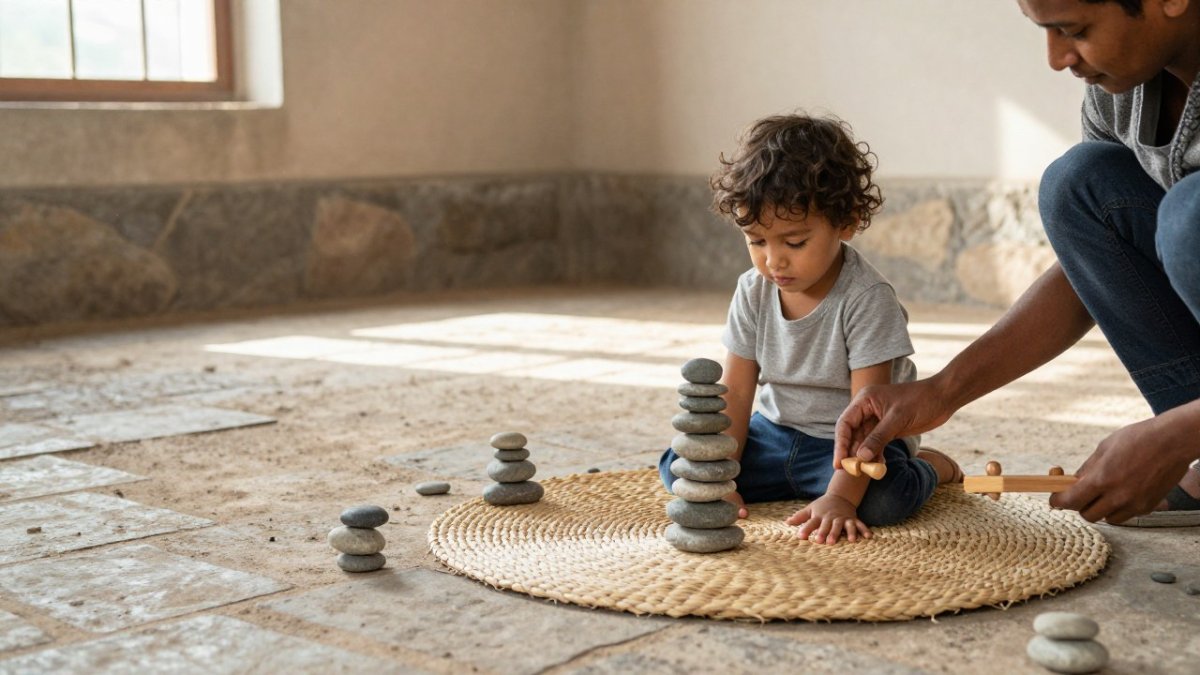
 How-to
How to Help a Child Manage Frustration with Heroic Nepal
Quick Summary
Help a child manage frustration by spotting triggers early, using a calm tone with short phrases, and practicing breathing and a calm-down space during calm moments. Frustration tolerance is a skill that grows with small, safe challenges at home. Families practice these skills together on the Heroic Learning platform, where children and their families learn through games.
- Keep a one-week note of times, triggers and reactions to spot patterns.
- Name the feeling, use short phrases, and keep your voice low and slow.
- Practice deep breathing like smelling a flower and blowing out a candle, three times.
- Give puzzles of 20 to 50 pieces and let your child keep trying before helping.
- Get calm yourself first, using a four-step protocol before responding to your child.
Table of Contents
- Why Frustration Shows Up So Strongly in Children
- Spotting Triggers Before a Meltdown Starts
- What to Say to a Frustrated Child in the Moment
- Calming Strategies for Children You Can Use Right Away
- Frustration Tolerance Activities for Kids at Home
- Emotional Regulation Activities for Kids of Different Ages
- Keeping Yourself Calm While Helping Your Child Calm Down
- Starting Your Child's Frustration Practice This Week
- Frequently Asked Questions
How to Help a Child Manage Frustration with Heroic Nepal
Last Updated: November 19, 2026
Why Frustration Shows Up So Strongly in Children
Frustration is one of the strongest feelings a child can have. A small block tower falls, a shoelace won't tie, and suddenly the whole afternoon feels ruined. This is normal.
The good news is that frustration tolerance is a skill, and skills can be taught.
Children feel frustration more intensely when they are tired, hungry, or overwhelmed. Younger children have fewer words for what they feel, so the feeling often comes out as crying, shouting, or throwing things.
Life skills education, the kind of learning that covers feelings, problem-solving, and self-control alongside school subjects, gives children a steady foundation. Compare life skills education with academic education to see how both fit together.
Spotting Triggers Before a Meltdown Starts
Most meltdowns follow a pattern. If you learn the pattern, you can step in earlier, before the frustration reaches its peak.
Common triggers include:
- Hunger or tiredness that makes small problems feel huge
- Changes in routine, like a new school schedule or a visitor at home
- Tasks that feel too hard, especially when a child is compared to a sibling
- Screen time ending suddenly, which often causes sharp reactions
- Feeling rushed during getting ready for school or bedtime
Keep a simple note for one week. Write down the time, what happened just before, and how your child reacted. Patterns usually show up within a few days. Once you see them, you can plan around the trigger, such as offering a snack before homework or giving a five-minute warning before switching activities.
What to Say to a Frustrated Child in the Moment
When a child is upset, the words you choose matter less than your calm tone. Keep your voice low and slow. A child in full frustration cannot take in long explanations, so keep your words short.
Try phrases like these:
- "You really wanted that to work. It's frustrating."
- "I can see you're upset. I'm right here."
- "Let's take one breath together."
- "We can try again when you're ready."
Avoid phrases such as "Stop crying right now" or "It's not a big deal." These tend to make children feel unheard, which often increases the frustration. Naming the feeling helps a child's brain settle, even before the problem is solved.
Calming Strategies for Children You Can Use Right Away
Calming a child works best when you practice the tool before the big moment. Teach one strategy at a time during calm periods, then use it when frustration rises.
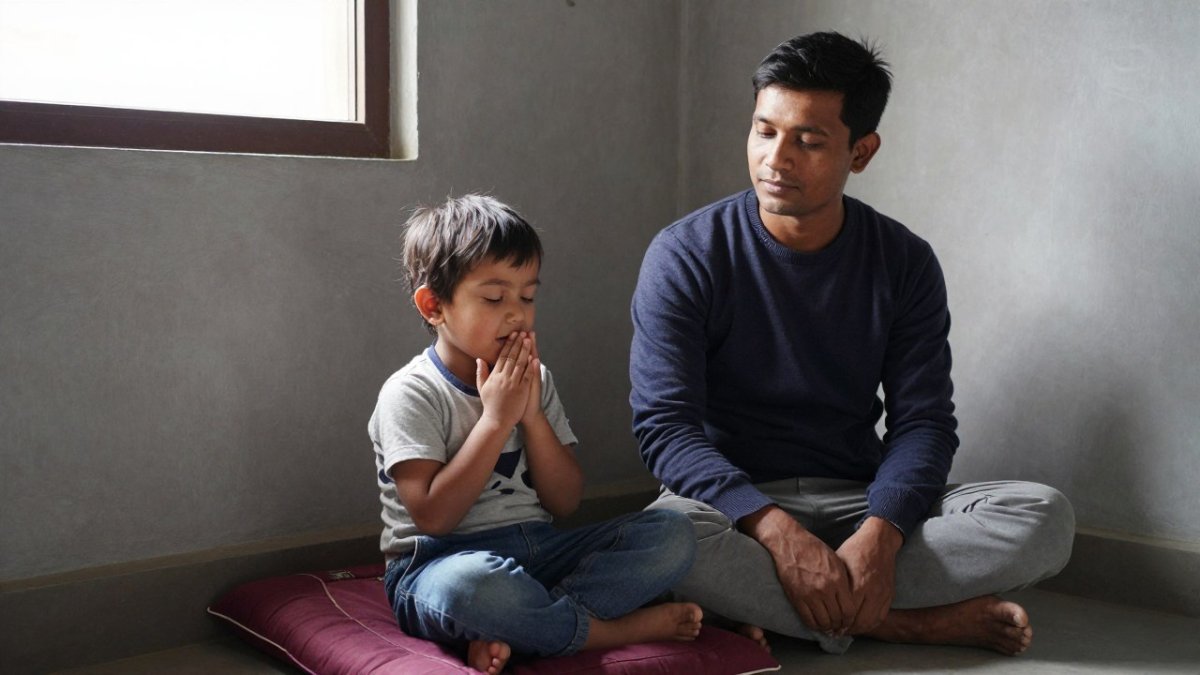
Deep breathing and a calm-down space
Deep breathing is one of the simplest tools for helping a child manage frustration.
A calm-down space helps too. Choose a corner with a cushion, a soft blanket, and a few picture books or drawing materials. Keep it free of screens and noise.
Some families in Nepal use a shared mat or a corner near a window. What matters most is that the child knows where to go and that you go there with them.
Frustration Tolerance Activities for Kids at Home
Frustration tolerance grows through small, safe challenges. Give your child tasks that are slightly hard but doable, then let them struggle a little before you help.
Try these at home:
- Puzzles with 20 to 50 pieces, letting your child keep trying before offering a hint
- Building games with blocks or bamboo pieces that can fall and be rebuilt
- Drawing tasks where mistakes can be turned into new shapes
- Simple cooking jobs, like stirring or washing vegetables, where things sometimes go wrong
- Board games where losing a round is part of the fun
Praise effort, not just success. Say "You kept trying even when it fell" instead of "You're so smart." This teaches your child that persistence matters.
Emotional Regulation Activities for Kids of Different Ages
Children need different support at different ages. What works for a four-year-old will not work for a twelve-year-old, and the same tool applied at the wrong stage can make frustration worse.
| Stage | What is happening in the brain | Activity to practice in calm moments | Script to use in the moment |
|---|---|---|---|
| Ages 2 to 4 | Language is still forming; feelings arrive faster than words | Feelings picture cards; a "big feeling, small feeling" sorting game with two baskets | "You wanted it. You can't have it. That's a big mad." |
| Ages 5 to 7 | Beginning to pause, but only for seconds | A 1-to-5 feelings scale drawn as a thermometer; practice rating a story character, not the child | "Where are you on your thermometer right now?" |
| Ages 8 to 11 | Can plan and reflect with support | A written "reset plan" of three steps the child chooses (drink water, walk to the window, squeeze a cushion) | "Which of your three steps do you want first?" |
| Ages 12 and up | Reasoning is stronger but status and autonomy matter more | The teen writes their own reset list and decides when a parent may step in | "I'm here. Tell me when you want help, or I can just sit." |
A few stage-specific notes that generic guides tend to skip:
- Ages 2 to 4: Keep the feeling word to one or two syllables and pair it with a gesture. Pointing to a card does more work than a sentence. Practice the cards when the child is calm, not mid-meltdown.
- Ages 5 to 7: The thermometer only works if you use it on yourself first. Say out loud, "I'm at a 3 because the traffic was slow," so the child sees the tool in use.
- Ages 8 to 11: Let the child write the reset plan in their own handwriting and post it where they can see it. Ownership is the mechanism; a plan dictated by a parent gets ignored.
- Ages 12 and up: Teens often read "calm down" as "be quiet." Offer presence without instruction. Many teens will talk while walking or in a car, not face to face.
For children with ADHD or autism, the same stages apply but the sensory channel matters more.
Watch out: if a child's frustration escalates to hitting, self-harm, or a meltdown that lasts more than about twenty minutes several times a week, the activities above are not a substitute for an assessment.
Practice one stage-appropriate activity for a week before adding another. The goal is not to eliminate frustration but to give the child a tool they can reach for without you. Explore the Heroic Learning platform's emotional regulation games for structured, age-appropriate practice.
Keeping Yourself Calm While Helping Your Child Calm Down
Staying calm is often the hardest part of the job, and it helps to have a clear protocol rather than a reminder. Children read their parents' faces and bodies closely. If you are tense or angry, your child will likely stay upset, because their nervous system is taking its cue from yours. This is the piece families on the Heroic Learning platform practice first.
A four-step protocol for the parent
- Notice the body signal. Pick your earliest warning sign: a tight jaw, a raised voice, fast breathing, or a hot face. Learn it now, while you are calm, so you can catch it later.
- Name it silently. Say to yourself, "I'm at a 4." Naming your own state lowers its intensity and stops it from leaking onto the child.
- Buy ten seconds. Step back half a pace, exhale longer than you inhale (count four in, six out), and drop your voice one level. Tell the child what you are doing: "I'm taking one breath, then I'll help you."
- Choose one sentence and repeat it. Pick a single line before the moment arrives, such as "I'm right here" or "We'll figure this out." Repetition keeps you from escalating into a lecture.
Scripts for the parent under pressure
- "I need a minute. I'm not leaving, I'm just breathing."
- "I'm getting frustrated too. Let's both take a breath."
- "I can't help while I'm this loud. Give me ten seconds."
These lines do two things at once: they regulate you and they model the exact skill you are teaching. A child who hears a parent name their own frustration learns that the feeling is survivable and talkable.
What to do when you have already lost your temper
It happens. The repair matters more than the perfect response. Wait until both of you are calm, then say plainly: "I shouted. That was mine, not yours. I'm sorry. Next time I'll take a breath first." Repair teaches children that relationships survive conflict, which is itself a frustration-tolerance lesson.
Watch out: if you find yourself dreading the next meltdown, snapping most days, or feeling numb afterward, that is a sign you need support of your own, not more willpower.
Parents who feel overwhelmed often benefit from practicing these steps with other adults before using them with a child. Run the four-step protocol out loud once this week, alone or with a partner, so the words are already in your mouth when the moment comes. Find everyday mental health support between therapy sessions for your own stress.
Starting Your Child's Frustration Practice This Week
You do not need a big plan to begin. Start with one small step each day this week.
- Day 1: Watch for triggers and write down what you notice.
- Day 2: Practice one breathing exercise together during a calm moment.
- Day 3: Set up a simple calm-down corner with a cushion and a book.
- Day 4: Try one frustration tolerance activity, like a puzzle.
- Day 5: Use one of the calming phrases the next time your child gets upset.
- Day 6: Talk with your child about what helped and what did not.
- Day 7: Pick one new tool to practice the following week.
Families who want structured support can explore the Heroic Learning platform, where children and households practice these skills together. Ready to act now? Join the Cause.
Frequently Asked Questions
How can I help my child calm down when they are frustrated?
Start by lowering your own voice and posture so your child feels safe. Name what you see, for example 'You are upset because the blocks keep falling.' Then offer one simple calming step, such as slow breathing together or moving to a quiet corner. Avoid lectures during the peak of the feeling. Once the child is calmer, talk through what happened and what might help next time. Consistency over several weeks builds the skill far better than a single perfect response.
What should I say to a child who is frustrated?
Keep sentences short and warm. Try 'I can see this is really hard for you. I am here.' Validate the feeling before offering a solution. Avoid phrases like 'Stop crying' or 'It is not a big deal', because they make children feel unheard. When the child is ready, ask a gentle question such as 'What part feels hardest?' This helps them put words to the feeling, which is one of the first steps toward managing it.
What activities help children manage frustration?
Useful everyday activities include puzzles with gradually harder pieces, board games where losing is allowed, drawing or clay work, and short movement breaks like stretching or jumping. Frustration tolerance activities work best when the task is slightly challenging but still achievable, so the child practices staying with a difficult feeling and finishing anyway. Praise the effort and persistence rather than only the result. Families using the Heroic Nepal platform practice these kinds of activities together as a regular family routine.
When should I seek professional help for my child's frustration?
Consider talking with a doctor, school counsellor or child development professional if frustration is very frequent, lasts a long time, leads to harm to self or others, or stops your child from sleeping, eating or attending school. Also seek support if outbursts continue despite steady, consistent responses over several months. Early help can make a real difference, and a professional can check for any underlying needs that may be driving the frustration.